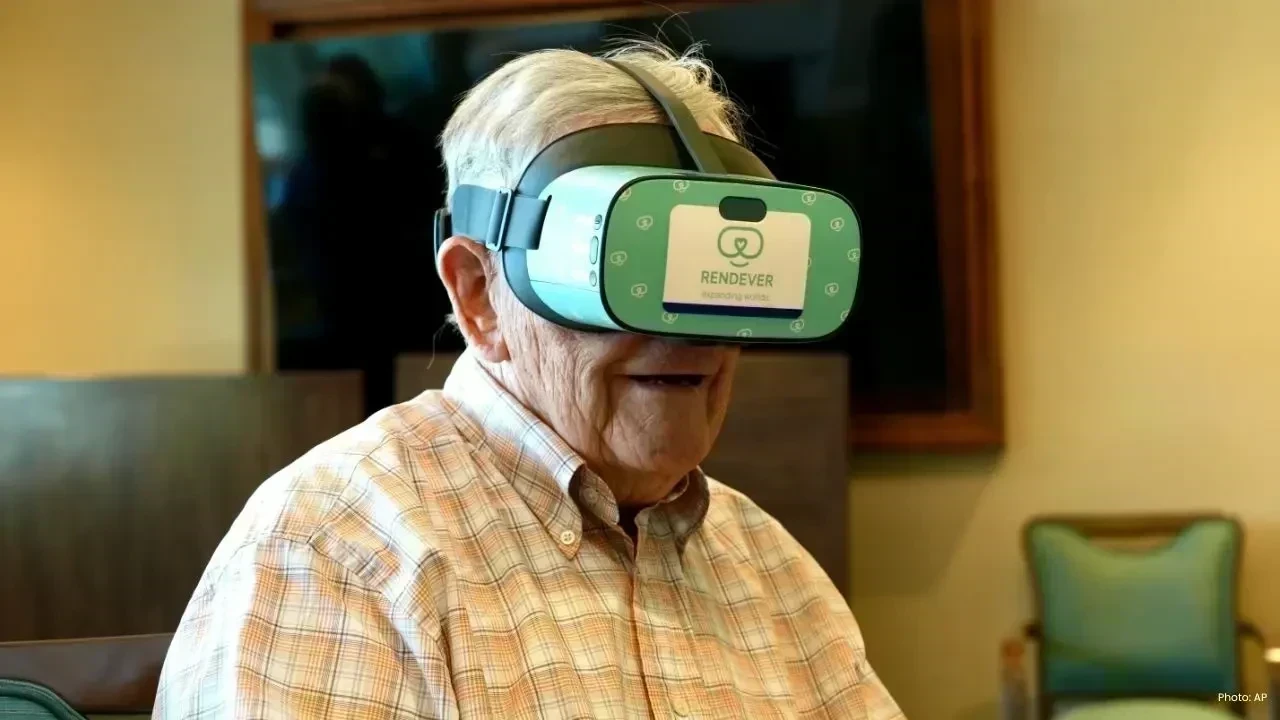
At first glance, The Terraces in Los Gatos, California, looks like many other retirement communities — calm, comfortable and designed to meet the daily needs of older adults. For many residents in their 80s and 90s, long-distance travel and physical adventures are no longer possible. Yet, thanks to virtual reality (VR), those limitations are no longer stopping them from exploring the world.
On select days, caretakers at The Terraces roll out VR headsets, giving residents the chance to experience places and moments they thought were long behind them. Within minutes, seniors are transported to European cities, underwater oceans or soaring hang-gliding journeys — all while seated safely among friends.
The VR programs are provided by Rendever, a company that has adapted immersive technology to serve a very human purpose: improving mental well-being and social connection among older adults. Rendever’s platform is now used in about 800 senior living communities across the United States and Canada.
From Quiet Rooms to Ocean Depths
During one recent session, residents could be seen paddling their arms in unison as they “swam” with dolphins through a 3D underwater experience. Laughter and amazement filled the room. “We got to go underwater and didn’t even have to hold our breath,” said 81-year-old Ginny Baird, smiling after the virtual dive.
Other experiences evoke equally strong reactions. A hot-air balloon ride prompted gasps of wonder, while some viewers clutched their chairs as if bracing against the wind. The emotional responses are genuine, even though the journey is virtual.
Revisiting Childhood Homes
Beyond thrilling adventures, VR has proven especially powerful in reconnecting seniors with their past. The technology allows residents to revisit childhood neighborhoods, hometown streets and familiar landmarks — sometimes for the first time in decades.
Sue Livingstone, 84, said a virtual visit to her childhood neighborhood in Queens, New York, convinced her of VR’s value. “It’s not just about seeing it again,” she explained. “It’s about all the memories that come rushing back.”
Livingstone believes the experience could also draw in residents who tend to stay within their comfort zones. Once curiosity takes hold, many are eager to try the headset themselves.
A Social Spark in Senior Living
According to Adrian Marshall, community life director at The Terraces, VR sessions often become conversation starters. Residents talk about what they saw, compare memories and bond over shared experiences — sometimes skipping favorite activities, like the popular Mexican Train dominoes game, to join a VR session.
“It helps create connections,” Marshall said. “People realize they share interests and life experiences. The virtual world becomes something very real for them.”
Research and Growing Support
Rendever recently received nearly $4.5 million in funding from the National Institutes of Health to study how VR can reduce social isolation among seniors living at home and their caregivers. Early research suggests that, when used thoughtfully, VR may help support cognitive function, strengthen memory recall and encourage meaningful social interaction.
Experts stress that VR should complement, not replace, traditional activities. “There’s always a risk of too much screen time,” said neuropsychologist Katherine “Kate” Dupuis. “But when used with purpose, it can help older adults engage, connect and share a sense of wonder.”
Easier Than Smartphones
For many seniors, VR can actually be simpler than navigating smartphones or tablets. Researchers note that headsets remove the need for small buttons or complicated menus, making technology more accessible.
Pallabi Bhowmick, a researcher studying VR use among older adults, said outdated stereotypes need to change. “Older adults are willing to embrace technology when it adds meaning to their lives,” she said. “It can also strengthen relationships across generations — grandchildren love hearing that their grandparents are using VR.”
A Personal Mission Turned Company
Rendever’s origins are deeply personal. CEO Kyle Rand co-founded the company in 2016 after wanting to help his grandmother cope with the emotional challenges of aging. With a background in neuroengineering, Rand saw how shared virtual experiences could bring people together.
“When seniors experience VR together, something changes,” he said. “They may start as strangers, but afterward they’re sitting together at lunch, continuing the conversation.”
Helping Those With Dementia
VR is also being explored as a tool to support people living with dementia. At another Silicon Valley retirement community, the Forum, residents use VR experiences to stimulate memory and emotional engagement.
Bob Rogallo, 83, who has dementia and no longer speaks, appeared visibly engaged during a virtual hike through Glacier National Park. His wife, Sallie, said the experience brought back memories of the couple’s decades traveling the U.S. in their RV. “It made me wish I was 30 years younger,” she said.
In another session, 93-year-old Almut Schultz laughed while watching a virtual classical concert at Colorado’s Red Rocks Amphitheatre, later reaching out as if to pet a playful puppy in her virtual space.
“That was quite a session,” she said afterward, smiling broadly.
A New Way to Experience Life
For many seniors, virtual reality is more than entertainment. It offers freedom, memory, connection and joy — all within reach. While the destinations may be digital, the emotions they spark are undeniably real.