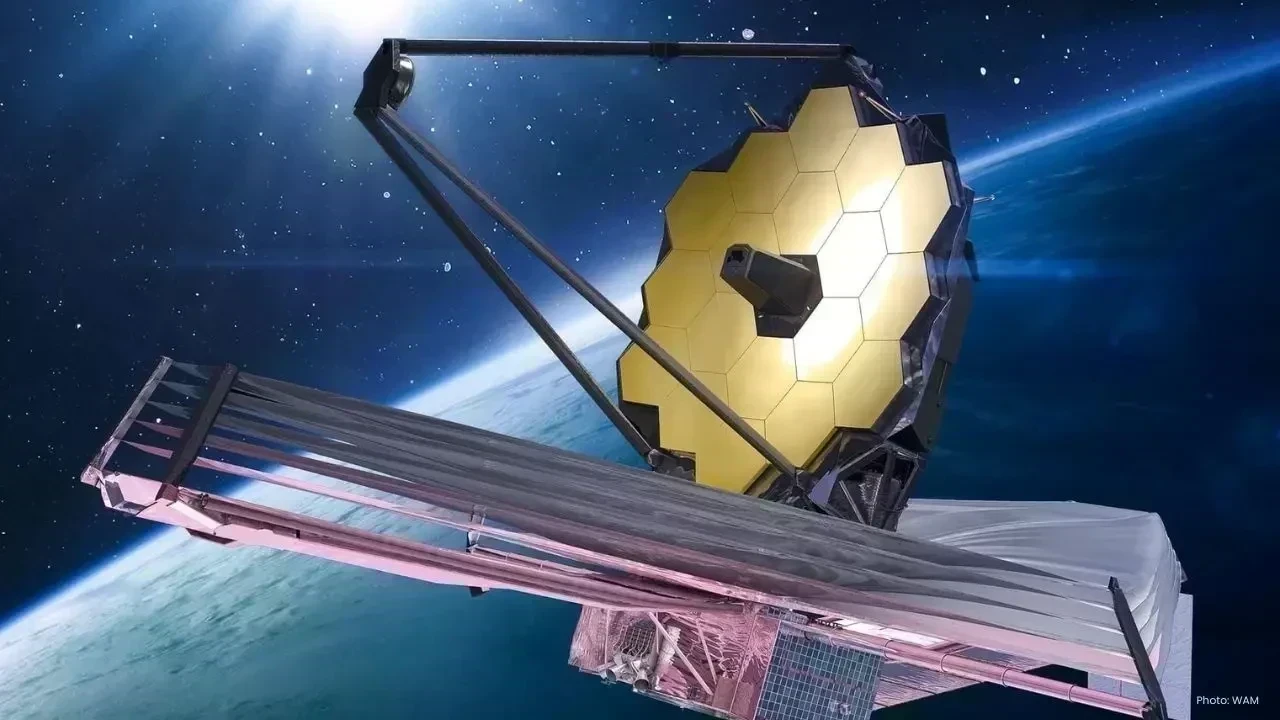
Scientists have created the most detailed map of dark matter ever using the James Webb Space Telescope (JWST). Dark matter is a mysterious substance that makes up most of the matter in the universe, but it cannot be seen directly because it does not emit or reflect light.
Ordinary matter, including stars, planets, and humans, makes up only about 15 percent of the universe’s matter. The remaining 85 percent is dark matter, which scientists study through its gravitational effects on galaxies and light.
To create the new map, researchers studied how light from around 250,000 distant galaxies bends as it travels through space. This bending, known as gravitational lensing, reveals where dark matter is located.
This new map has twice the resolution of earlier maps made with the Hubble Space Telescope. It also looks much deeper into space, showing the universe as it was 8 to 10 billion years ago, a key time when galaxies were forming.
The map reveals the cosmic web in great detail, including galaxy clusters, massive filaments of dark matter, and regions with less matter.
James Webb’s powerful infrared instruments allow it to see fainter and more distant galaxies with much sharper images than Hubble. This helps scientists create more accurate dark matter maps.
The research was published in the journal Nature Astronomy, led by NASA scientist Diana Scognamiglio. She said the telescope is like “a new pair of glasses for the universe,” helping scientists see hidden structures more clearly.
The map covers the COSMOS region of the sky in the constellation Sextans and will help future studies on how the universe formed and evolved.