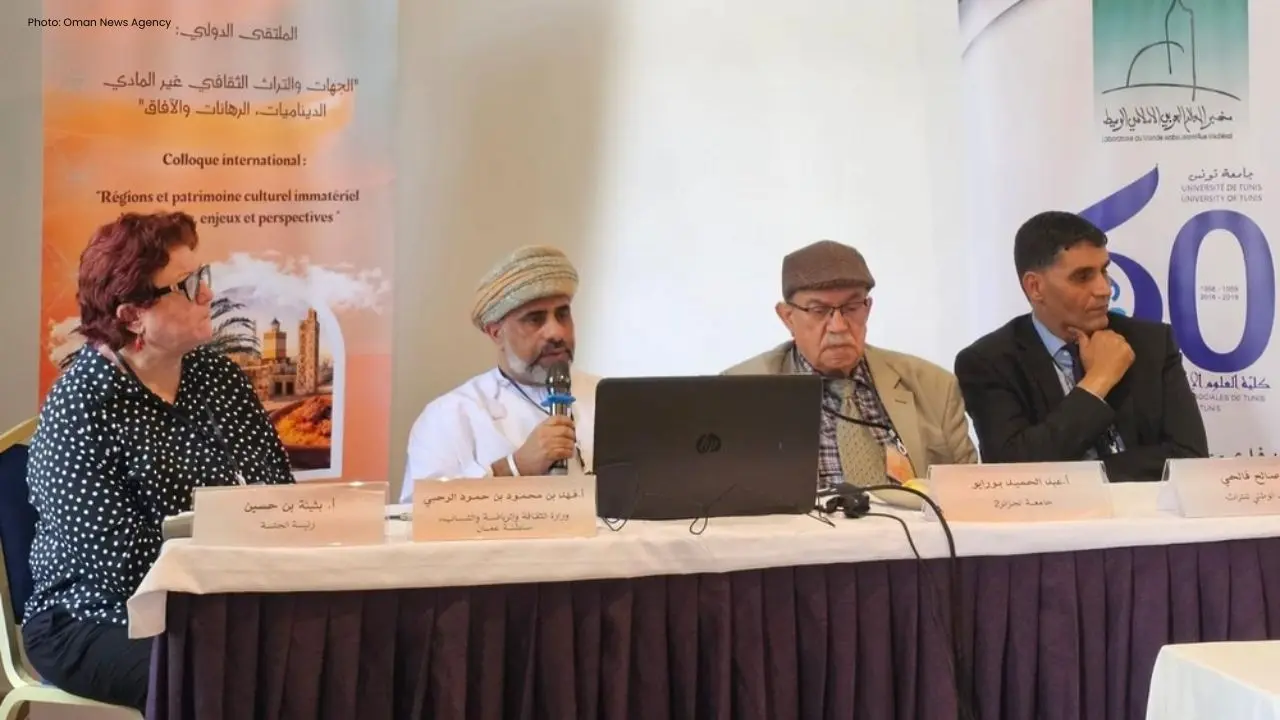
Literary Forum of Oman presented the Sultanate of Oman’s experience in preserving intangible cultural heritage during the International Conference on Regions and Intangible Cultural Heritage held in Tunis. The event brought together researchers, cultural experts and institutions from different countries to discuss methods of protecting oral traditions, cultural memory and national identity.
During the conference, Fahd bin Mahmoud Al-Rahbi, Head of the Oral History Department at the Literary Forum under the Ministry of Culture, Sports and Youth, delivered a detailed presentation on Oman’s efforts to preserve oral narratives and document traditional cultural practices. He explained how Oman has developed a systematic approach to recording oral history and transforming cultural memory into sustainable knowledge resources for future generations.
Al-Rahbi highlighted that Oman’s cultural preservation efforts are strongly connected to international agreements, especially the UNESCO Convention for the Safeguarding of Intangible Cultural Heritage signed in 2003. He noted that Oman has successfully registered 18 heritage elements on UNESCO’s Representative List of the Intangible Cultural Heritage of Humanity by 2026, reflecting the country’s commitment to protecting its cultural identity and traditional practices.
The presentation also focused on the UNESCO-Sultan Haitham Prize for the Safeguarding of Intangible Cultural Heritage, which supports international projects dedicated to preserving human heritage and cultural diversity. Officials explained that the initiative encourages global cooperation in safeguarding traditions, customs and oral histories that are at risk of disappearing over time.
The conference paper reviewed the work of the Oral History Department in collecting stories and memories from elderly citizens across Oman. Researchers described older generations as “human libraries” who preserve important details about Omani social life, customs, traditions and historical experiences. Several field studies and publications documenting traditional lifestyles, crafts and local practices from different governorates of Oman were also presented during the session.
Special attention was given to documenting traditional Omani systems and endangered cultural practices, including the ancient aflaj irrigation system, traditional threshing methods and linguistic studies related to the Bathari language. Experts said preserving linguistic and cultural diversity remains an important part of Oman’s national heritage strategy and contributes to maintaining the country’s rich historical identity.
The presentation also introduced future plans aimed at strengthening cultural sustainability in Oman. These plans include establishing a specialised national centre for collecting and analysing folk heritage, integrating intangible heritage studies into university curricula and translating Omani heritage publications into several international languages such as French, German, Spanish and Chinese. Officials also announced plans to organise more oral history seminars and train a new generation of field researchers to continue documenting Oman’s cultural legacy for the future.