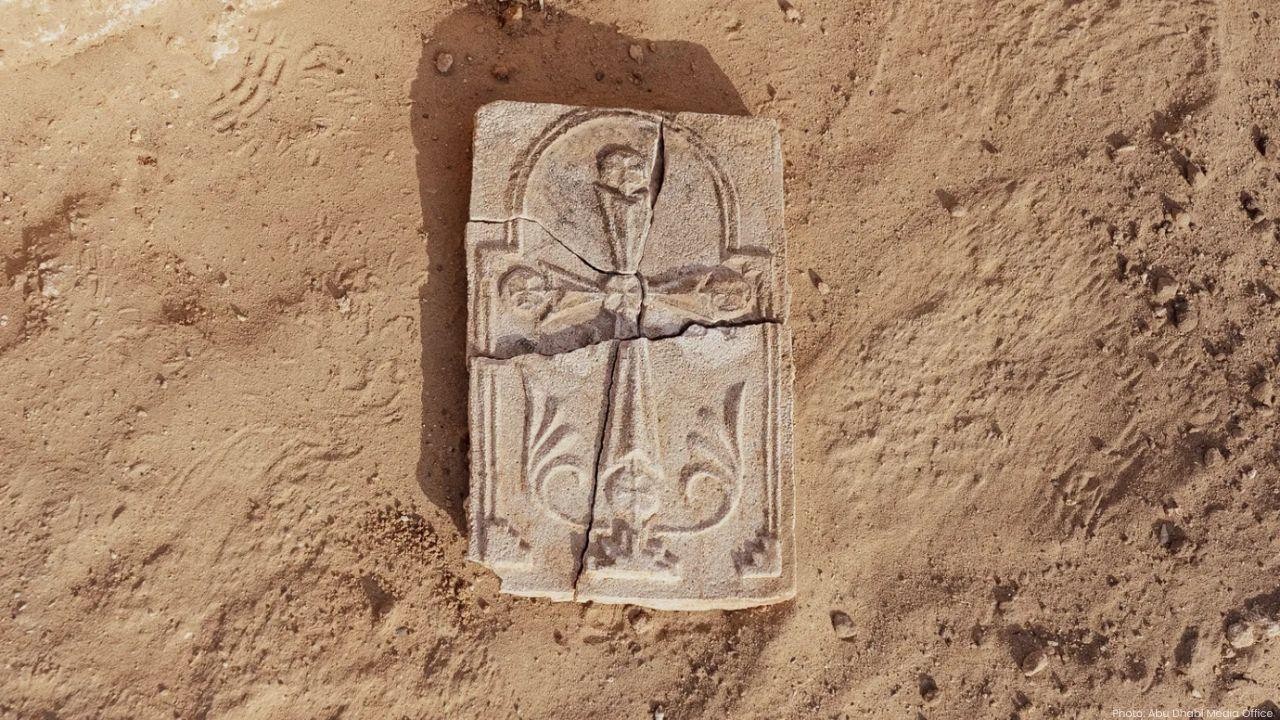
The Department of Culture and Tourism – Abu Dhabi (DCT Abu Dhabi) has announced an important archaeological discovery on Sir Bani Yas Island, located off the coast of Al Dhafra Region in Abu Dhabi. Archaeologists uncovered a Christian cross moulded on a stucco plaque from an ancient monastery. This discovery comes during the first major excavation on the island in over 30 years, shedding new light on the rich cultural and religious history of the UAE.
The discovery is more than just an artifact; it is a powerful symbol of the deep-rooted traditions of peaceful coexistence that have existed in the UAE for centuries. Experts believe the cross was used by monks for spiritual reflection and meditation.
Stay informed with the latest news. Follow DXB News Network on WhatsApp Channel
New Excavation Efforts Reveal Historical Treasures
In January 2025, DCT Abu Dhabi launched a new fieldwork campaign on Sir Bani Yas Island. During this campaign, archaeologists discovered the Christian cross, carefully moulded on a plaster plaque. The style of the cross shows similarities with discoveries in Iraq and Kuwait and is connected to the Church of the East, which traces its origins back to ancient Iraq.
This finding highlights the UAE’s commitment to preserving its cultural heritage. The discovery of this cross reinforces the country’s legacy of coexistence, tolerance, and peaceful living among people of different faiths.
Leadership Emphasizes Cultural Significance
His Excellency Mohamed Khalifa Al Mubarak, Chairman of DCT Abu Dhabi, commented on the discovery, saying, “The ancient Christian cross on Sir Bani Yas Island is a testament to the UAE’s enduring values of coexistence and cultural openness. It is a source of pride and reminds us that peaceful coexistence is not new, but has been part of our region’s history for centuries.”
He further explained that ongoing excavations demonstrate the scale and importance of Abu Dhabi’s cultural legacy. “As DCT Abu Dhabi continues to uncover these stories, we remain dedicated to preserving and promoting the emirate’s heritage. These discoveries help us connect with the past and inspire future generations to embrace unity and mutual respect.”
History of the Sir Bani Yas Monastery
The Christian monastery on Sir Bani Yas Island dates back to the seventh to eighth centuries CE. It was first discovered in 1992 by the Abu Dhabi Islands Archaeological Survey (ADIAS) under the direction of the UAE’s leadership. Since then, excavations have revealed a church and a monastic complex.
The monastery appears to have been designed with separate spaces where senior monks could retreat for periods of contemplation and ascetic living. Archaeologists are now studying a nearby group of courtyard houses where early Christian monks may have lived during their retreat.
Christianity in the Region
Sir Bani Yas Island is part of a wider network of churches and monasteries that emerged across the Arabian Peninsula during the same period. Similar sites have been found in Umm Al Quwain, Kuwait, Iran, and Saudi Arabia. Christianity first spread across the region between the fourth and sixth centuries CE.
Christians and Muslims coexisted peacefully until the eighth century CE, when the Sir Bani Yas monastery was peacefully abandoned. Today, the church and monastery stand as a reminder of Abu Dhabi’s ancient past, surrounded by nature reserves that are home to gazelles, hyrax, and other wildlife.
Restoration and Visitor Facilities
As part of a restoration project in 2019, DCT Abu Dhabi took measures to protect the church and monastery. Shelters were built to preserve the structures, and the site has since reopened to the public. Visitors can now explore the monastery with improved facilities, including directional signage and a small exhibition of artifacts from previous excavations.
The exhibition features items such as glass chalices, a cross-shaped stucco, and a stamp seal with a scorpion motif. Additionally, a multi-faith church inspired by the ancient site has been built near the visitor center, allowing for reflection and appreciation of the island’s historical and spiritual significance.
Future Excavations
DCT Abu Dhabi plans to continue excavating the courtyard houses surrounding the monastery. These areas may be integrated into a wider visitor trail that connects the island’s cultural landmarks. By uncovering more artifacts and historical structures, the ongoing research aims to provide a deeper understanding of the lives of early Christian monks and their role in shaping the cultural heritage of the UAE.
Symbol of Peace and Coexistence
The discovery of the Christian cross on Sir Bani Yas Island is not only significant for archaeology but also carries a powerful message about the UAE’s longstanding values of coexistence, tolerance, and mutual respect. The artifact shows that diverse communities lived and practiced their beliefs in harmony centuries ago.
This discovery strengthens the UAE’s narrative as a region that has historically embraced cultural diversity. By studying these ancient sites, future generations can better understand the history of their land and learn valuable lessons about coexistence, spirituality, and cultural preservation.
The uncovering of the Christian cross on Sir Bani Yas Island is a remarkable milestone in Abu Dhabi’s archaeological research. It highlights the UAE’s commitment to uncovering its rich heritage while celebrating a history of tolerance and peaceful living.
With ongoing excavations and restoration efforts, Sir Bani Yas Island continues to serve as a bridge between the past and the present. The site not only educates visitors about the region’s historical and religious significance but also inspires appreciation for the values of unity, respect, and coexistence that have shaped the UAE over centuries.