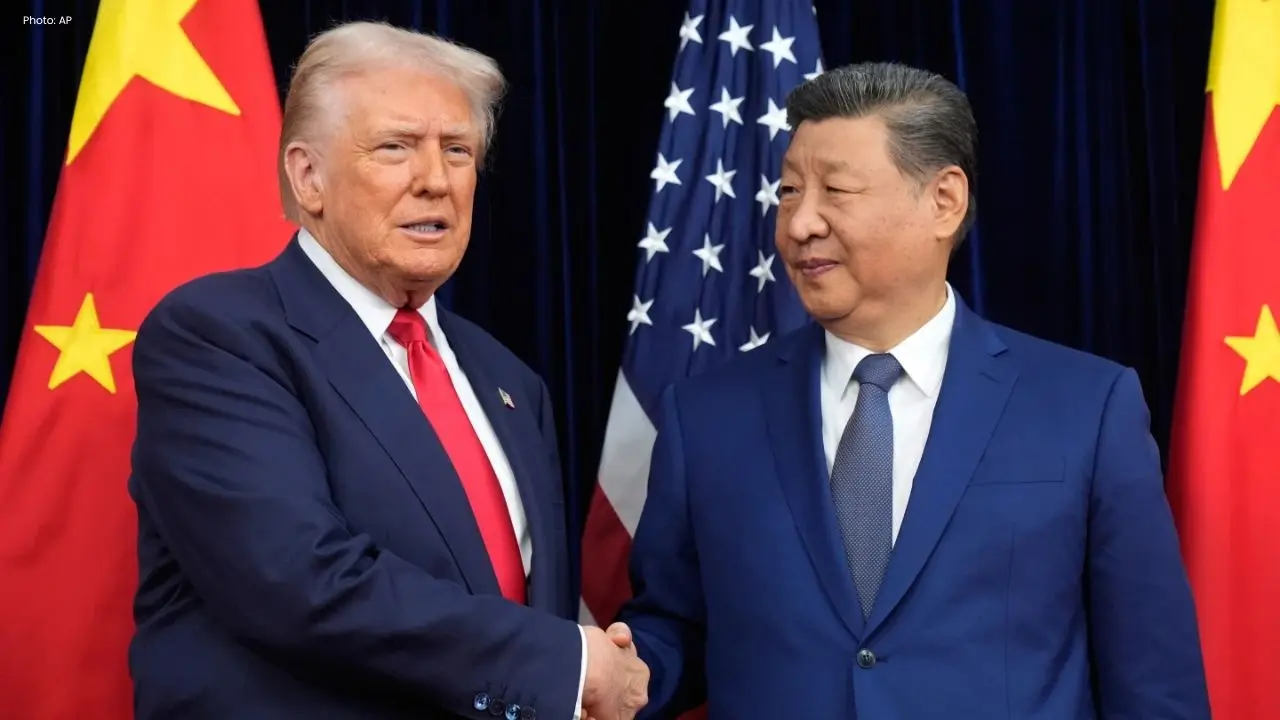
US President Donald Trump is gearing up for a significant visit to China this week, but escalating tensions due to the Iran war and persistent trade conflicts are likely to complicate the diplomatic environment compared to his visit in 2017. Trump is set to land in Beijing on Wednesday night for discussions with Chinese President Xi Jinping, with a focus on trade, global security, energy partnerships, and the trajectory of US-China relations.
This visit coincides with a critical period for both nations, as China continues to forge strong economic links with Iran. As one of Iran's largest oil customers, Beijing is under increased pressure to assume a greater role in fostering regional stability amid the ongoing Middle Eastern conflicts. Earlier, Trump urged China to assist in reopening the Strait of Hormuz after Iranian actions disrupted shipping paths and impacted global markets. Even though China later urged Iran to support a fragile ceasefire, tensions are still palpable in discussions between Washington and Beijing.
According to the White House, Trump and Xi Jinping will engage in multiple formal meetings during this visit, including a welcoming ceremony at the Great Hall of the People, as well as private consultations centered on trade and strategic partnerships. Trump is also anticipated to join a state banquet and visit pertinent cultural landmarks in Beijing with Xi. However, political analysts suggest that this journey may not receive the same extraordinary reception Trump enjoyed during his earlier visit nearly a decade ago.
In 2017, China orchestrated extravagant ceremonies, military showcases, and private cultural gatherings that underscored the strong rapport between the two leaders. Trump and First Lady Melania Trump were even treated to a private meal in the iconic Forbidden City. Today, experts believe that the evolving dynamics of commerce, military tensions in Asia, and divergent views on global standing have rendered relations more complex.
Trade continues to be a major friction point between the US and China. Trump’s earlier tariff strategies led to prolonged economic tension between the two largest economies in the world. Recently, China's reduction in American soybean purchases and the curtailment of rare earth mineral exports followed new US tariff threats. Despite an initial temporary trade truce, uncertainty looms over future economic interactions. Negotiators from both sides are currently deliberating on the possibility of extending their agreement to shield global markets from instability.
Political analysts note that both Trump and Xi recognize the importance of maintaining open lines of communication, despite their differences. Over the years, Trump has consistently praised Xi, referring to him as a robust and respected leader. Conversely, China views Trump as a leader who favors direct negotiations and personal diplomacy. Analysts suggest that Beijing might leverage the current geopolitical climate, particularly surrounding the Iran crisis, to bolster its position in trade discussions with the United States.
The imminent summit is also expected to influence future engagements between the two leaders later in the year. Trump may welcome Xi at the White House in the upcoming months, with further discussions planned during forums such as the Asia-Pacific Economic Cooperation summit and the G20 summit. Despite ongoing disagreements over trade, security, and global influence, both countries seem committed to keeping diplomatic dialogues active amid rising international tensions.