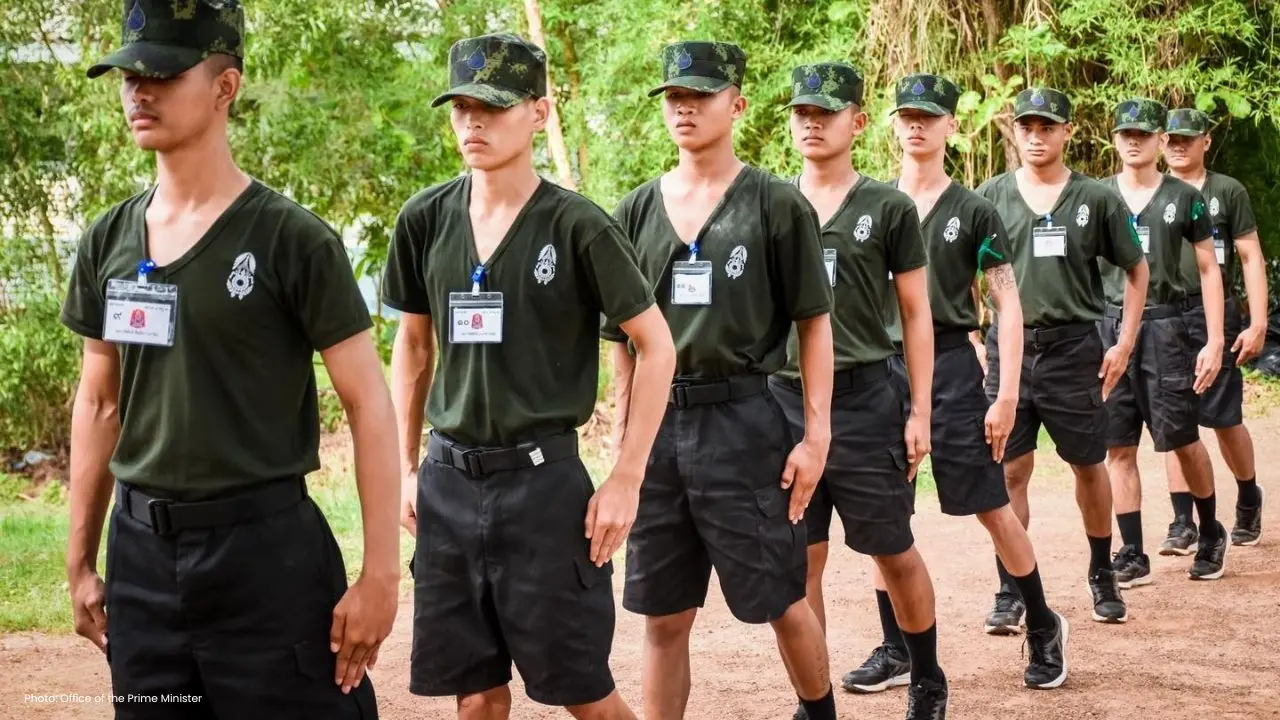
The Royal Thai Army has kicked off the inaugural week of training for its newest enlistees at the Military District 210's training unit in Nakhon Phanom. This program is designed for young recruits to physically and mentally acclimate as they embark on their journey to become soldiers in the Thai military.
In this initial training phase, emphasis is placed on developing physical fitness, discipline, and endurance. Recruits will engage in unarmed combat and basic military drills aimed at nurturing confidence, fostering teamwork, and preparing them for future military responsibilities.
The sessions are being held at the Phra Yod Muang Khwang Camp in Kuruku Subdistrict of Mueang District, Nakhon Phanom. Instructors and military trainers closely monitor the recruits, ensuring that all activities are conducted securely and effectively during their transition.
Military officials highlight that this first week is crucial, enabling recruits’ bodies to adapt gradually to rigorous military routines. The meticulously structured activities aim to enhance stamina and prepare recruits for more demanding training in the approaching weeks.
According to the Army Public Relations Center, instructors are keenly observing the recruits to help bolster their physical strength, discipline, and self-assurance. This training also focuses on developing the appearance and conduct of the recruits to embody the standards expected of new soldiers in the Thai armed forces.
The Thai military routinely conducts recruit training programs nationwide to ready young personnel for national defense and emergency readiness. This is seen as vital to uphold military preparedness and cultivate discipline among service members.
Local residents in Nakhon Phanom frequently witness military exercises, given that the province hosts significant military facilities and training centers. Its location also contributes strategically, being close to Thailand’s northeastern border regions.
Military experts point out that contemporary recruit training is not solely centered on combat readiness; it also prioritizes leadership skills, teamwork, and physical well-being. Training methods have evolved to ensure that recruits can meet both traditional military duties and modern operational needs.
The Army Public Relations Center has mentioned that training activities will proceed in phases over the ensuing months as recruits advance toward becoming fully qualified soldiers. Officials are optimistic that this program will enhance the skills and professionalism of Thailand’s future military personnel.