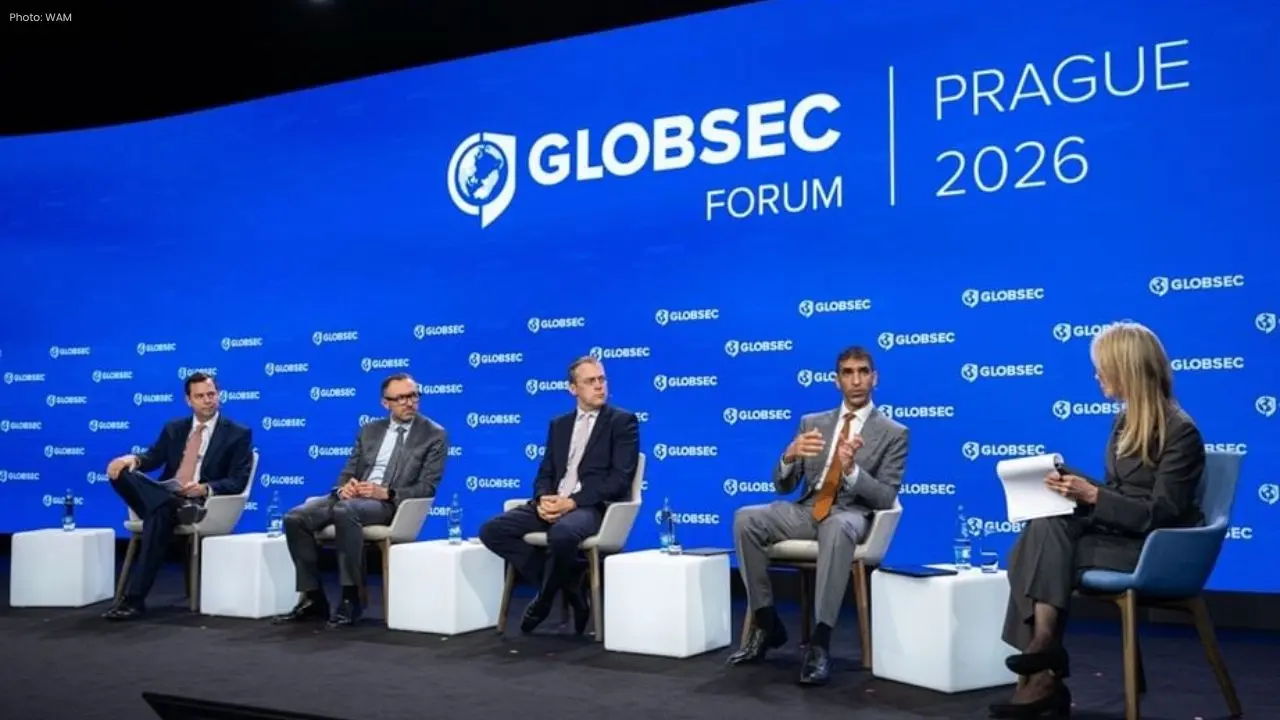
Thani bin Ahmed Al Zeyoudi said the UAE has taken major steps to protect global trade flows and maintain economic stability during the ongoing Iran conflict.
Speaking at the GLOBSEC Forum 2026 in Prague during a panel titled “The Ripple Effect: How the Iran War is Shaping Global Economies and Politics”, Al Zeyoudi explained how the UAE responded quickly to disruptions affecting international shipping and supply chains.
He said the UAE activated alternative trade corridors to ensure the smooth movement of goods across the region. These measures included the increased use of the eastern ports of Fujairah and Khorfakkan, the launch of air freight bridges for urgent food and pharmaceutical shipments, a Green Corridor with Oman, and a new Sharjah-Dammam trade bridge.
Al Zeyoudi also revealed that the UAE introduced an AED 1 billion economic support fund to help businesses continue operations during the crisis. The support package mainly focuses on small and medium-sized enterprises (SMEs) affected by regional trade disruptions.
In addition, the UAE Central Bank launched a Five-Pillar Financial Institution Resilience Package aimed at maintaining credit flow and supporting financial stability across the country.
Al Zeyoudi said the current crisis has accelerated the UAE’s long-term plans to strengthen Gulf logistics and build a more resilient trade system.
He added that the UAE’s Comprehensive Economic Partnership Agreement (CEPA) programme continues to play a major role in expanding foreign trade. The programme has already produced 36 agreements with countries across six continents and contributed to the UAE’s non-oil foreign trade reaching US$1.03 trillion in 2025.
According to Al Zeyoudi, the UAE remains an important global trade and investment hub connecting markets across the Gulf, Africa and Asia. He stressed that the country’s role in global trade has become even more important during the current geopolitical tensions.