Zamzam Well, regarded as the most famous well in the world, continues to hold deep religious importance for Muslims across the globe. Located within the Mataf area of the Masjid al-Haram, the holy well remains one of the most visited and respected landmarks for pilgrims performing Hajj and Umrah.
The well extends to a depth of around 30 meters, including 12.80 meters of built structure and 17.20 meters carved into mountain rock. Its diameter varies between 1.5 and 2.5 meters depending on the depth.
The history of Zamzam Well dates back to the time of Prophet Ismail. According to Islamic tradition, Prophet Ibrahim left his wife Hagar and their infant son Ismail in a dry valley without water or vegetation. As Hagar searched desperately for water between the hills of Safa and Marwa, Angel Gabriel struck the ground with his heel, causing water to gush out from the earth. Hagar collected the flowing water, and since then Zamzam has become a symbol of Allah’s mercy and blessing.
Over the centuries, Saudi authorities and rulers have continuously modernized and maintained the well to ensure safe and easy access to Zamzam water for millions of worshippers.
In 1373 AH, late King Abdulaziz bin Abdulrahman Al Saud introduced modern pumps and connected reservoirs to 12 taps around the well, making water distribution easier for pilgrims.
Later, in 1382 AH during the reign of late King Saud, the buildings surrounding the well were removed as part of the expansion of the Mataf area. The well was relocated beneath the Mataf in a basement, replacing the old bucket system with modern taps.
In 1399 AH, late King Khalid ordered one of the largest cleaning operations in the history of Zamzam Well. Expert divers used advanced methods to clean the well, resulting in increased water flow.
During the reign of late King Fahd in 1424 AH, studies related to the expansion of the Grand Mosque recommended covering the well and sealing its entrances to provide more space for tawaf and prayer.
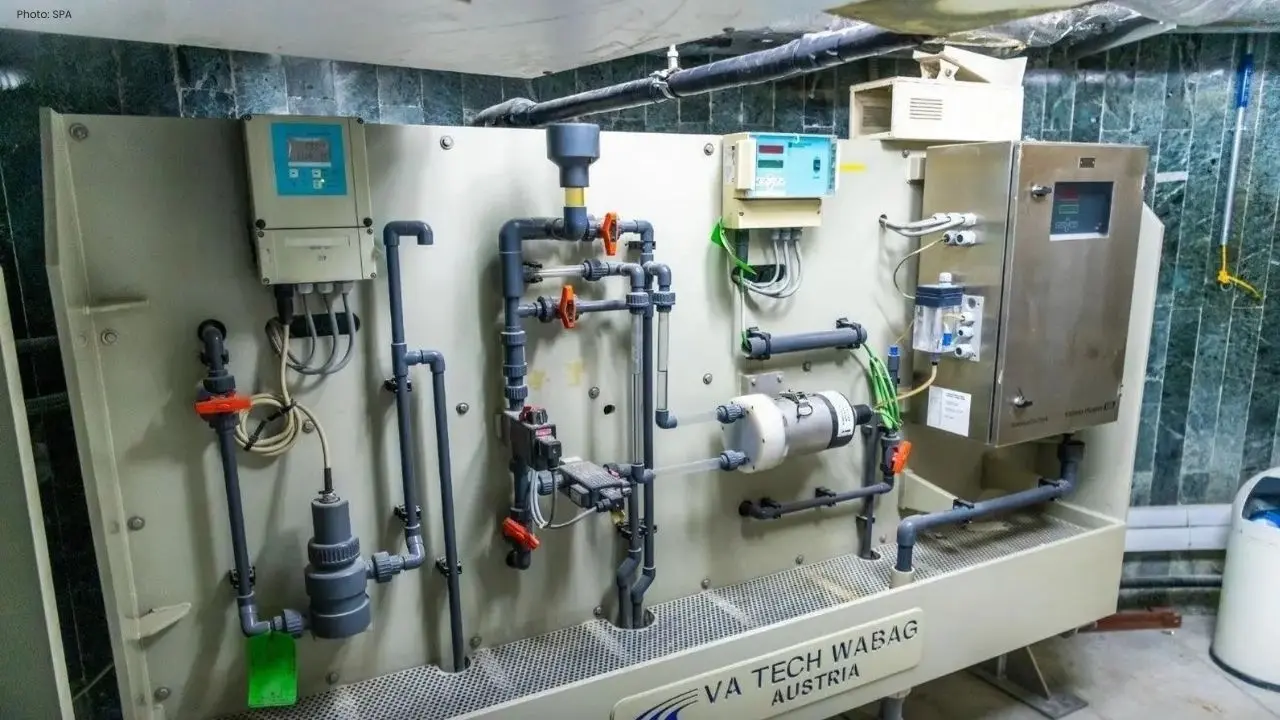
Later, during the reign of late King Abdullah, a complete water purification and bottling system was established. The project included modern automated systems for purification, monitoring, storage, and distribution of Zamzam water.
Under the leadership of Custodian of the Two Holy Mosques Salman bin Abdulaziz Al Saud, further development projects for Zamzam Well were completed, including advanced sterilization processes, impurity removal, and environmental studies around the well.
Today, Zamzam water supplied to visitors of the Grand Mosque and the Al-Masjid an-Nabawi passes through several purification and sterilization stages. Raw water is pumped from the well through stainless steel transmission lines using giant pumps before being distributed to millions of pilgrims and worshippers every year.