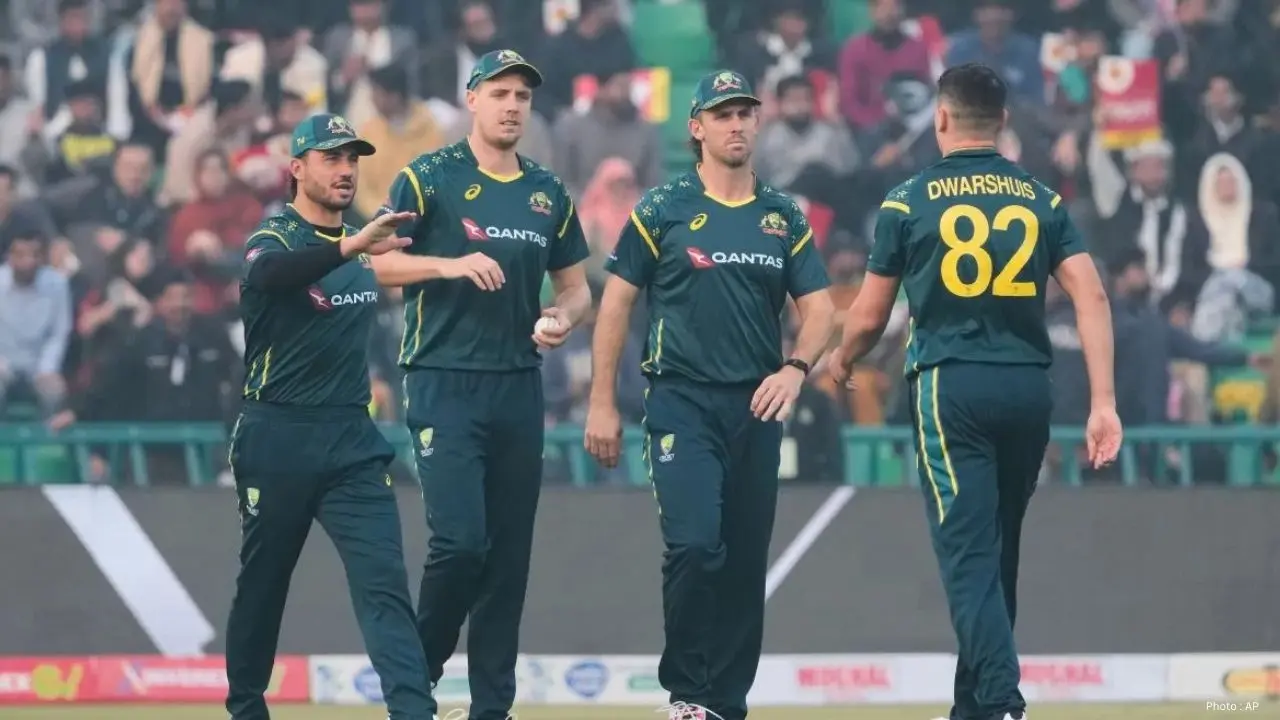
In a surprising turn of events, Australia has unveiled its squads for the upcoming white-ball tours to Pakistan and Bangladesh, and notably missing from the T20 lineup is veteran all-rounder Glenn Maxwell. This decision indicates a significant shift in Australia's cricket strategy as they prepare for the future after an early exit from the T20 World Cup earlier this year.
The selection committee has opted for a roster featuring several inexperienced players, highlighting their intent to cultivate a fresh team ahead of forthcoming international tournaments. Young batter Oliver Peake and all-rounder Liam Scott are among those receiving their first call-ups, while the experienced Mitchell Marsh will take the captain's helm during these series.
The Australian squad will first engage in a three-match ODI series in Pakistan before heading to Bangladesh for both ODI and T20 encounters. These tours are pivotal for testing new players and combinations in anticipation of future ICC events.
The absence of Glenn Maxwell is a focal point of discussion following the squad announcement. For years, he has been one of Australia’s most impactful T20 players, integral to multiple key victories. However, selectors seem determined to embrace a younger roster after the 2026 T20 World Cup disappointment.
Alongside Maxwell, notable players Marcus Stoinis and Steve Smith have also been omitted from the T20 squad. Cricket analysts suggest that Australia is entering a transition phase, allowing younger talents to step into the limelight on the international stage.
Furthermore, Australia’s renowned fast-bowling trio—Pat Cummins, Mitchell Starc, and Josh Hazlewood—will not partake in these tours. The selectors have cited workload management as the reason for their absence, as Australia prepares for a packed international schedule in the upcoming months.
Mitchell Marsh's selection as captain is another key decision, reflecting his evolution into a central figure in Australia’s white-ball lineup. His guidance will be essential as the squad navigates this phase of renewal following recent challenges in T20 cricket.
Particular attention is on young batter Oliver Peake, whose recent performances in youth cricket have established him as one of Australia’s future stars. The selectors believe these tours will provide him invaluable international exposure early in his career.
The Bangladesh tour is expected to present a tough challenge, given that subcontinent conditions generally favor spin bowling and slower pitches. Historically, Australia has faced difficulties in Asian conditions, making these encounters crucial for later tournaments in the region.
For Glenn Maxwell, this omission casts uncertainty over his future in international T20 cricket. Despite being one of Australia’s most gifted white-ball players, the focus on youth and the national rebuilding strategy may jeopardize his place in the team.
The squad announcement underscores Cricket Australia’s commitment to long-term planning and fostering emerging talent. While the absence of seasoned players like Maxwell is notable, the hope is that this younger group will lay a robust foundation for the future.
Thus, Australia’s tours to Pakistan and Bangladesh will extend beyond the typical bilateral series; they could signify the dawn of a new chapter in Australian white-ball cricket as the apparatus sets its sights on the next generation of international competition.