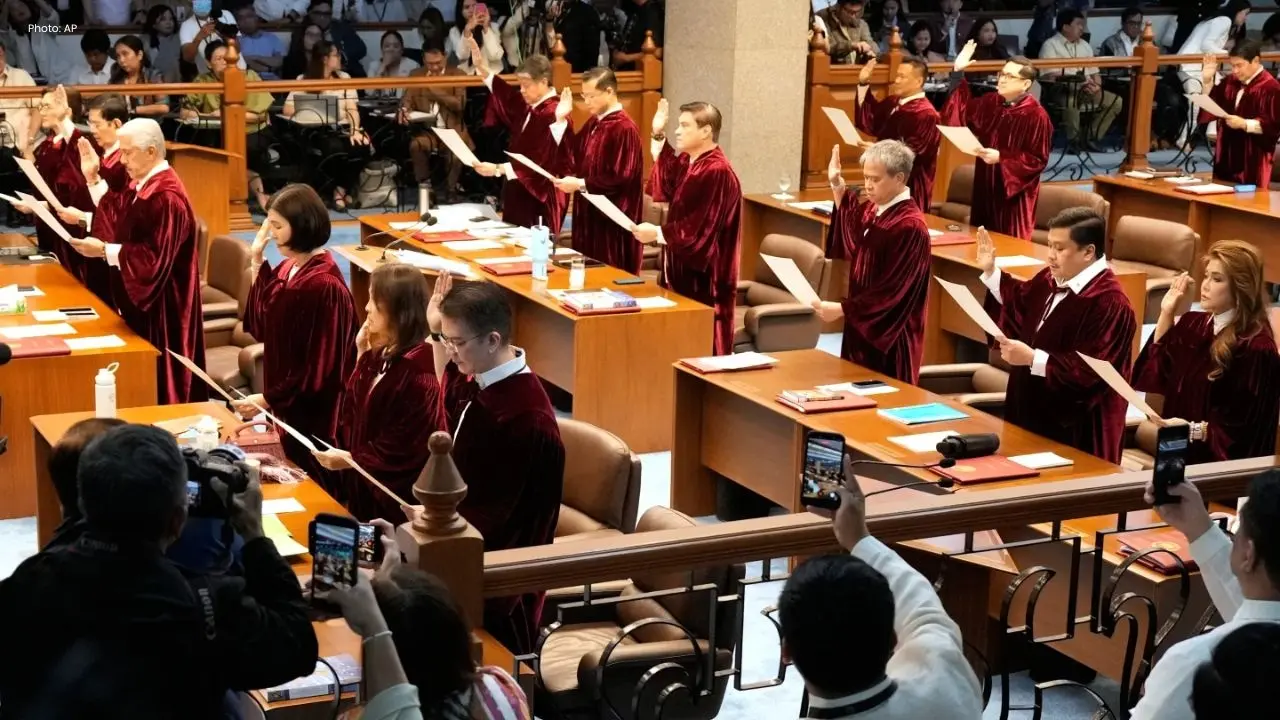
The Philippine Senate has officially opened its impeachment court to address the case against Vice President Sara Duterte, marking a significant escalation in the nation's ongoing political tumult and highlighting rifts within the government.
In a decisive move, the House of Representatives voted convincingly to impeach Duterte, citing claims of unexplained wealth, misappropriation of public funds, and dubious remarks threatening President Ferdinand Marcos Jr.
Duterte has refuted these allegations, asserting that her political rivals are orchestrating a campaign against her as the 2028 presidential election approaches, where she is anticipated to be a contender. Her legal team has indicated that they will respond formally in accordance with constitutional mandates.
This impeachment struggle arrives at a critical juncture for the Duterte family. Former President Rodrigo Duterte, her father, faces charges at the International Criminal Court related to allegations of crimes against humanity stemming from his controversial anti-drug initiatives that led to significant casualties.
Political tensions surged last week as Duterte-affiliated lawmakers assumed temporary leadership in the Senate. The atmosphere became even more charged following Senator Ronald dela Rosa's return to the limelight, a Duterte confidant who had reportedly been evading arrest linked to ICC inquiries.
Reports indicate that dela Rosa narrowly escaped arrest before being granted protective custody within the Senate, where a confrontation between Senate security and government forces erupted, instigating widespread alarm in Manila.
Philippine authorities are now probing the possible connection between this security incident and dela Rosa's alleged evasion. Amid rising concerns of political unrest, President Ferdinand Marcos Jr. has called for stability and restraint.
Observers note that the escalating conflict between the Marcos and Duterte factions reflects deep-rooted political divides in the Philippines, suggesting that this impeachment trial will significantly influence the national political landscape in the upcoming months.
The trial's conclusion could not only shape the country's political trajectory ahead of the next presidential election but also alter the dynamics among influential political lineages in the Philippines.