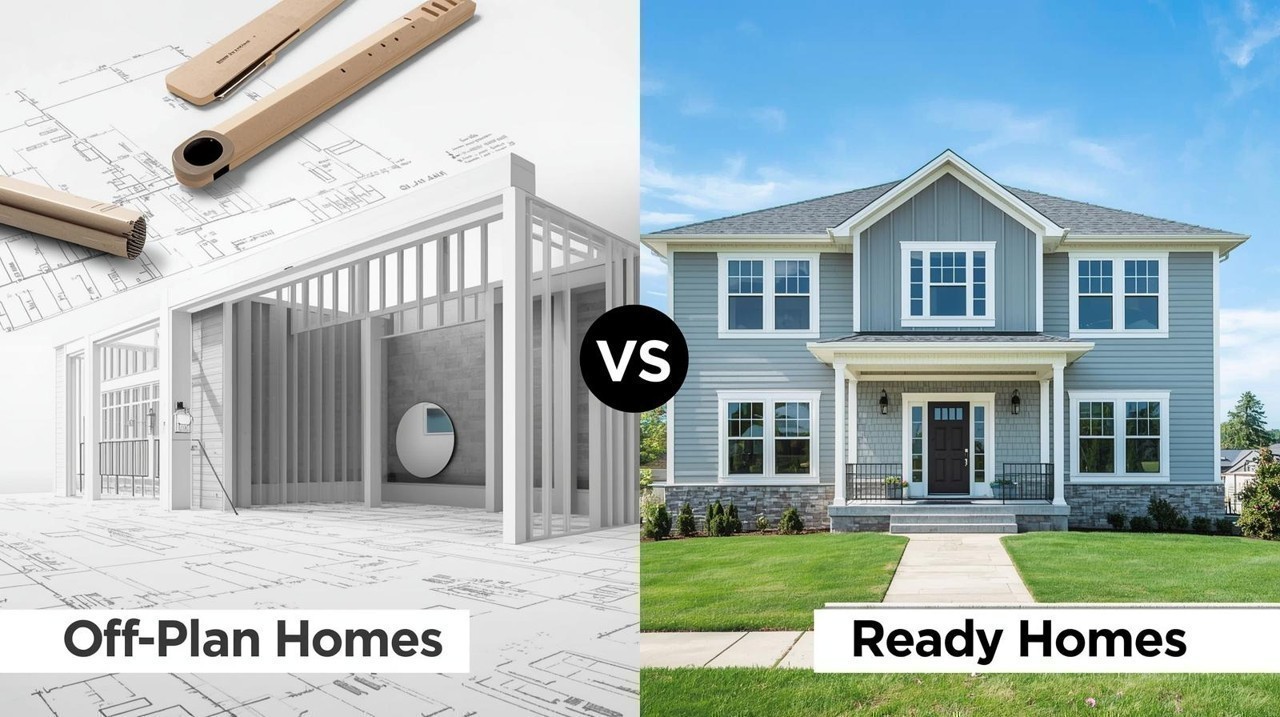
Off-Plan vs. Ready Homes: A Step-by-Step Guide to Making the Right Property Choice
Choosing between an off-plan property and a ready-to-move home is one of the biggest decisions for any buyer or investor. Both options have strong advantages, but also risks that many people overlook. A structured, step-by-step evaluation helps you make a confident choice that fits your goals, timeline, and budget.
Step 1: Understand the Core Differences
Off-Plan Property
These are properties still under construction. Buyers purchase based on blueprints and future promises.
Ready Property
These are fully constructed homes where you can inspect the actual unit and move in immediately.
Step 2: Compare Costs and Payment Flexibility
Off-Plan
-
Lower entry price compared to ready units
-
Attractive developer payment plans
-
Higher chances of capital appreciation
But delays can increase your rental and EMI costs.
Ready Property
-
Higher upfront cost
-
Immediate bank loan eligibility
-
No construction delay risk
But limited room for price negotiation in popular locations.
Step 3: Evaluate Your Investment Timeline
If you plan to move in soon
A ready home is ideal because you avoid waiting years for possession.
If you want long-term appreciation
Off-plan projects generally offer better ROI, especially when located in emerging areas.
Step 4: Inspect Developer Reputation
For Off-Plan
Checking the developer’s:
-
Past delivery track record
-
Construction quality
-
Financial stability
is extremely important. Delays or abandoned projects are the biggest risks.
For Ready Property
Inspect the building age, maintenance quality, and society rules. Older buildings often require immediate repair expenses.
Step 5: Compare Long-Term Returns
Off-Plan
-
Better capital appreciation
-
Ideal for investors who want growth over time
Ready Property
-
Immediate rental income
-
Lower risk, stable returns
Your choice depends on whether you prioritise rental yield or future appreciation.
Step 6: Analyse Risk Factors
Risks with Off-Plan
-
Construction delays
-
Changes in floor plans
-
Variation in promised finishes
-
Developer bankruptcy
Risks with Ready Property
-
Higher initial price
-
Limited customization
-
Potential hidden maintenance issues
Always create a risk checklist before finalizing.
Step 7: Match the Property With Your Financial Capacity
Off-Plan
Works well if you prefer smaller instalments over time and don’t need immediate possession.
Ready Property
Better if you want to avoid project uncertainty and start living or renting out immediately.
Step 8: Use On-Ground Verification
For Off-Plan
Visit the site, check construction speed, talk to residents from the developer’s past projects.
For Ready Property
Inspect the unit physically—walls, plumbing, wiring, flooring, ventilation, and society surroundings.
Final Takeaway
Both off-plan and ready properties can be excellent choices when matched correctly with your budget, risk tolerance, and long-term goals. With careful comparison and step-by-step evaluation, you can confidently choose the property option that offers the best value, best security, and best returns for your needs.
Disclaimer
This article provides general guidance for property buyers. Real estate prices, risks, and regulations vary by region and may change over time. Readers should verify details with real estate professionals, legal advisors, and financial experts before finalizing any property decision.