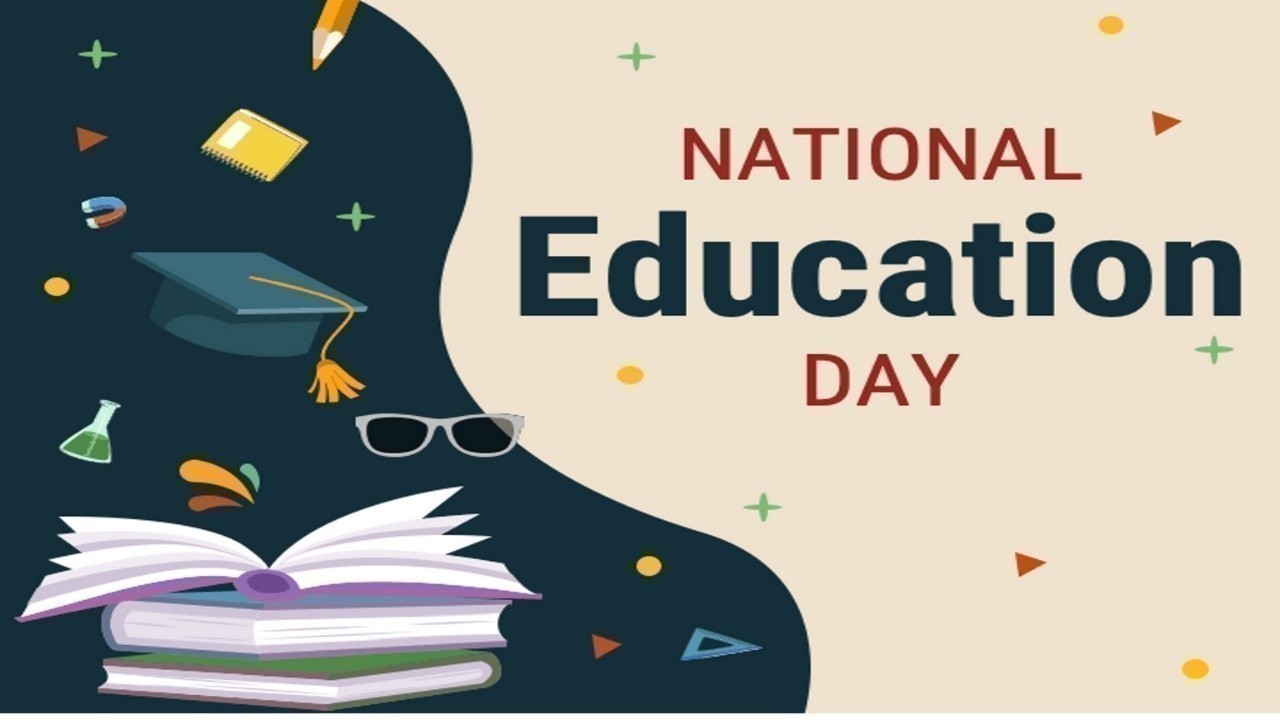
Every year, on 11 November, India celebrates National Education Day — a day that stands as a reminder of the nation’s commitment to knowledge, progress, and empowerment through learning. It commemorates the birth anniversary of Maulana Abul Kalam Azad, independent India’s first Minister of Education, a visionary who believed that education was not merely a system but a moral force shaping the destiny of a civilisation.
Azad’s philosophy was far ahead of its time. He saw education as a tool not limited to classrooms but as a dynamic force capable of transforming society, uplifting communities, and building citizens who could think critically, innovate confidently, and lead responsibly. His strong advocacy for universal primary education, girl-child learning, scientific thinking, and modern universities laid the foundation of contemporary Indian education.
Today, National Education Day is both a tribute and a moment of introspection. It celebrates achievements while urging society to acknowledge the challenges still ahead — from digital inequalities to skill shortages. As India strides toward becoming a global knowledge powerhouse, the relevance of this day grows even stronger.
Maulana Abul Kalam Azad: The Visionary Behind the Day
A Leader Guided by Knowledge
Maulana Azad was a scholar, philosopher, freedom fighter, and intellectual force in India’s development. His contributions to education were profound and multi-layered.
He believed:
-
Education is a right, not privilege
-
No society can progress without scientific thinking
-
Literacy must accompany values and civic duty
-
Education must reach women and underserved communities
Key Contributions
His tenure shaped some of India’s most crucial educational frameworks:
-
Expanded universal schooling vision
-
Established the University Grants Commission (UGC)
-
Strengthened IITs and central universities
-
Promoted scientific and technical education
-
Supported national cultural institutions and libraries
Azad understood that nation-building begins in the classroom and that the strength of a country lies in the minds of its youth.
Why National Education Day Matters
Education as a Driver of Equality
India is diverse — culturally, linguistically, and economically. Education bridges divides, enabling equal opportunity and social mobility.
Innovation and Global Competence
Today’s world demands thinkers, creators, innovators, and problem-solvers. National Education Day emphasizes building skills relevant to global progress — from technology to research and entrepreneurship.
Human Values and Citizenship
Education is more than literacy. It must inspire empathy, civic responsibility, discipline, and respect for diversity. This day reminds us that schooling must mold responsible leaders and compassionate citizens.
India’s Education Journey: From Foundation to Future
Post-Independence Foundation
India started with limited infrastructure and large illiterate populations. Over decades, schools multiplied, higher education expanded, and public policy built institutions that today compete globally.
Modernisation and Expansion
From chalk boards to smart boards, from libraries to digital repositories, Indian classrooms have changed significantly. Universities and skill centers now integrate internships, labs, research projects, and startup culture.
Digital Revolution in Learning
Online platforms, ed-tech innovations, remote classrooms, and AI-assisted learning tools are helping democratize education, particularly for learners in remote regions.
Key Focus Areas Marking National Education Day
Holistic Learning
Modern education values academic success and life skills — critical thinking, creativity, emotional intelligence, and digital literacy.
Inclusive Growth
Efforts focus on including every learner:
-
Girls’ education initiatives
-
Scholarships for underprivileged students
-
Special-needs learning programs
-
Regional language inclusion in learning
Skill-Centric Education
Industries demand skills beyond degrees — coding, communication, finance, entrepreneurship, robotics, design, and vocational capabilities are encouraged in schools and colleges.
Research and Scientific Temper
From student research cells to national innovation missions, India is encouraging learners to ask questions, experiment, and explore beyond textbooks.
The Role of Teachers in India’s Learning Landscape
Guides and Mentors
Teachers shape minds and character. Their influence stretches beyond a syllabus — into values, confidence, and aspirations.
Digital-Ready Educators
Modern teachers adapt to hybrid classrooms, online platforms, and tech-driven pedagogy while nurturing empathy and understanding in students.
Continuous Training
Professional development programs help educators stay updated with evolving teaching tools, global models, and student-centric methods.
Student-Centric Learning: A Cultural Shift
Active Learning Over Rote Memory
Progressive classrooms encourage debate, presentations, hands-on projects, experiments, and peer learning.
Personalised Learning
AI tools, online modules, and adaptive assessments tailor pace and style to individual strengths and challenges.
Entrepreneurial Mindset
Innovation cells, campus startup hubs, and ideation labs encourage students to build products and solve real-world problems.
Bridging the Digital Divide
Technology Access
While urban schools adopt digital tools quickly, rural institutions still lack connectivity in many regions. National Education Day highlights the need for equitable access to devices, internet, and digital content.
Regional Language Education
Digital learning content in local languages makes learning accessible to millions and protects cultural identity.
Challenges Still Ahead
Quality Variations
Urban-rural gaps, resource differences, and teacher shortages challenge uniform quality.
Stress and Competition
Students face pressure from exams, expectations, and peer comparisons. Well-being efforts must go hand in hand with academic systems.
Skill Gap
Industry-required skills are evolving faster than traditional academic updates, demanding constant reform.
National Education Day Celebrations Across India
Common Activities
Educational institutions observe the day with:
-
Seminars and debates
-
Essay and quiz competitions
-
Tribute events for Maulana Azad
-
Teacher-student dialogues
-
Book fairs and reading sessions
-
Skill workshops and innovation showcases
These events inspire discussions on learning goals, opportunities, and reforms.
Looking Ahead: India’s Education Vision
Education for All, Quality for All
The future demands stronger technology integration, modern curricula, and continued policy support to bring every student equal learning excellence.
Global Leadership in Knowledge
With world-class universities, research hubs, youth population strength, and technological ambition, India aims to emerge as a global knowledge leader.
A Human-First Philosophy
Amid digital disruption, empathy, culture, ethics, environmental awareness, and inclusivity must stay central — just as Azad envisioned.
Conclusion
National Education Day is more than a calendar event — it is a celebration of India’s progress, a salute to Maulana Abul Kalam Azad’s unparalleled vision, and a call to action for strengthening learning for generations to come.
Education builds character, fuels dreams, empowers communities, and lights the path toward a progressive, just, and enlightened society. As India marches ahead in global innovation and leadership, nurturing inclusive, skill-rich, values-driven education remains essential.
Honoring the past, strengthening the present, and shaping a future powered by knowledge — that is the true spirit of National Education Day.
Disclaimer
This article is meant for educational and awareness purposes and reflects general perspectives on National Education Day and the evolution of India’s educational system.