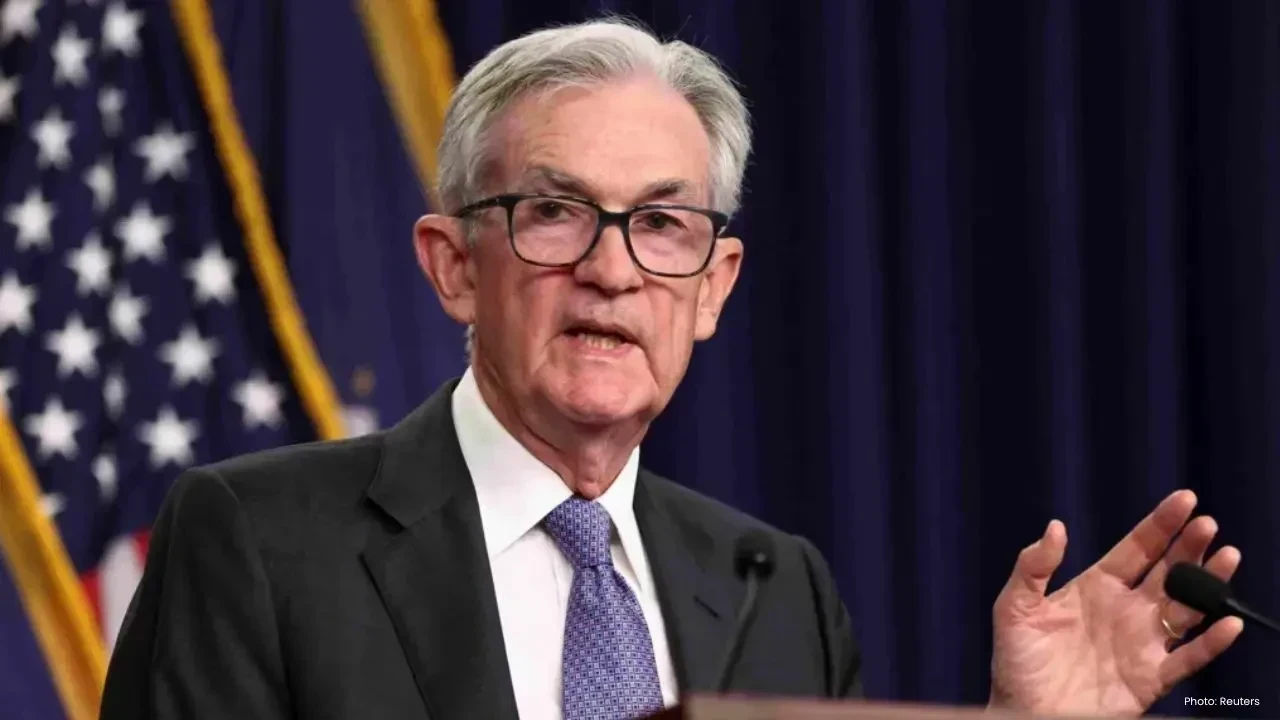
The US Federal Reserve has announced its third interest rate reduction this year, decreasing it by 0.25 percentage points to a range of 3.50%–3.75%—marking a three-year low. This decision comes amidst notable divisions within the central bank regarding how to navigate a sluggish job market while coping with persistent inflationary pressures.
Recent projections from the Fed suggest the possibility of another rate reduction next year, contingent on forthcoming economic metrics. Chair Jerome Powell emphasized the necessity of analyzing the effects of the three previous cuts before committing to further moves. “We are well-positioned to wait and see how the economy evolves,” Powell stated, mentioning that upcoming data will be crucial leading into the January meeting.
Amid criticisms from figures like former President Donald Trump—who has called for more aggressive cuts—Powell acknowledged the difficulty of addressing both unemployment and inflation simultaneously. “You can’t do two things at once,” he noted.
The rate decision was not unanimous, highlighting increasing rifts among Fed members. Three officials expressed dissent: Stephen Miran advocated for a larger 0.5 percentage point cut, while Austan Goolsbee and Jeffrey Schmid preferred to keep rates unchanged.
Following the Fed's announcement, Trump reiterated his stance that the rate cuts could have been more significant, suggesting rates should be “the lowest in the world.”
Compounding the uncertainty are concerns regarding the US government shutdown, which has left the Fed with limited reliable economic data. Currently, concerns surrounding a weakening labor market are overshadowing inflation fears.
Recent statistics indicate a slight uptick in the unemployment rate from 4.3% to 4.4% in September, reinforcing the rationale for rate cuts designed to invigorate the economy by making borrowing costs more affordable.
Although inflation remains above the Fed’s 2% goal—hitting 3% in September for the first time this year—analysts believe the recent softer inflation data may lead the central bank to prioritize support for the labor market.
Consultant Colleen McHugh from Wealthify noted that while high inflation poses challenges for rate cuts, the poor jobs market may have swayed the Fed's decision. She anticipates one or two additional cuts next year, depending on economic trends.
Powell recognized the unusual tension within the Fed between achieving both price stability and maximum employment. “When you have competing pressures, this is what you see,” he explained, acknowledging the respectful nature of the debates.
Looking ahead, data regarding November’s labor market and inflation will likely shed light on future interest rate pathways. Analysts suggest that further signs of job market slowdown may amplify calls for additional easing.
Moreover, Trump is searching for Powell's successor, whose term concludes next May, adding to the uncertainty. Kevin Hassett, a key adviser to Trump and former Council of Economic Advisers chair, is seen as a prominent candidate, alongside others like economist Kevin Warsh and current Fed Governor Christopher Waller.
Experts caution that the next Fed chair must strike a balance between independence and credibility; any perception of political bias could disturb market confidence. Thomas Hoenig from the Mercatus Center warned of possible strong market reactions should the Fed chair appear politically influenced.
Powell dismissed the idea that the search for a new chair affects his decisions, stating it does not influence his policies. “No,” he replied when questioned on whether Trump’s ongoing search impacted his approach.
As the Fed navigates these evolving challenges, market participants will keenly observe how the interest rate policy adapts to changing economic circumstances in the coming months.