AI Is Quietly Replacing Entry-Level Jobs — No One Is Talking About It
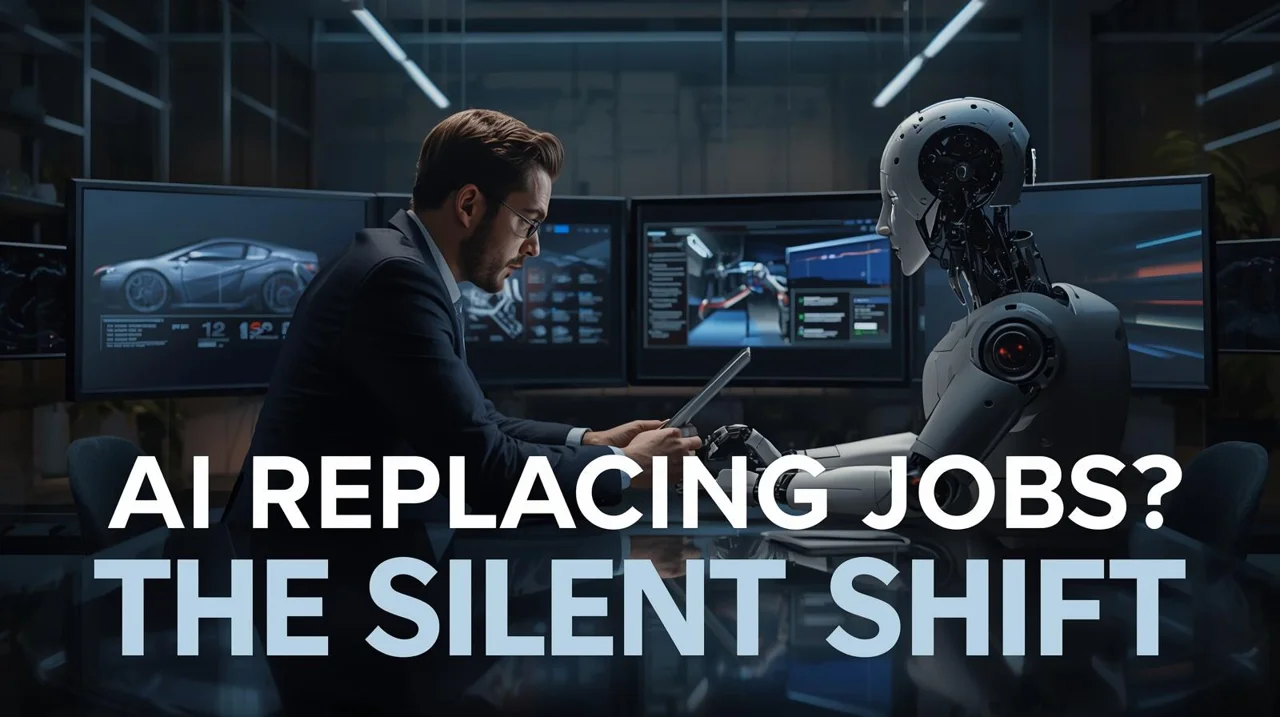
A silent shift is happening in the job market—AI is gradually replacing many entry-level jobs, and most people are not fully aware of its impact yet.
While automation has existed for years, recent advancements in AI have made it capable of handling tasks that were traditionally done by beginners or junior employees.
This change is not always visible, but it is happening across industries.
The key question is:
Is AI really replacing entry-level jobs, and what does it mean for job seekers?
Why Entry-Level Jobs Are Most Affected
Entry-level roles are often based on repetitive and predictable tasks, which makes them easier to automate.
Routine work – Tasks like data entry, basic customer support, and scheduling can be automated
Lower cost for companies – AI tools reduce the need for hiring and training new employees
Higher efficiency – AI can work faster and with fewer errors
24/7 availability – Systems can operate without breaks
Because of these advantages, companies are slowly reducing dependency on entry-level hiring.
Jobs That Are Already Being Impacted
Many entry-level roles are already seeing changes due to AI adoption.
Data entry jobs – Automated systems can process and manage data quickly
Customer support roles – Chatbots and AI assistants handle common queries
Basic content writing – AI tools can generate simple articles and captions
Administrative roles – Scheduling, emails, and documentation are increasingly automated
These roles are not disappearing completely, but the number of opportunities is reducing.
Why This Shift Is Not Being Widely Discussed
Despite the impact, this topic is not openly talked about enough.
Gradual change – Jobs are not disappearing suddenly, but slowly reducing
Positive narrative around AI – Focus is more on opportunities than risks
Lack of awareness – Many people are unaware of how quickly AI is evolving
Transition phase – Companies are still balancing between humans and AI
This makes the change less visible but still significant.
How This Affects Job Seekers
The impact is especially strong for freshers and beginners entering the job market.
Fewer entry-level openings mean higher competition.
Employers now expect candidates to have practical skills and experience, even for basic roles.
Job seekers may need to invest more time in learning skills before getting hired.
This shift is changing the traditional career starting point.
New Opportunities Created by AI
While AI is replacing some jobs, it is also creating new opportunities.
AI-related roles – Jobs in AI tools management, prompt writing, and automation
Creative roles – Content creation, design, and storytelling are still human-driven
Strategy-based roles – Decision-making and planning require human thinking
Hybrid roles – Combining human skills with AI tools increases efficiency
Those who adapt can benefit from these new opportunities.
How to Stay Relevant in the AI Era
Adapting to change is the key to long-term success.
Learn in-demand skills – Focus on skills that AI cannot easily replace
Use AI as a tool – Improve productivity instead of competing with it
Build practical experience – Work on real projects to gain confidence
Stay updated – Keep learning as technology evolves
Being flexible and proactive is essential in today’s job market.
Future of Entry-Level Jobs
Entry-level jobs will not completely disappear, but they will evolve.
Roles will require more skill, adaptability, and problem-solving ability.
Basic tasks will be automated, while human roles will focus on higher-value work.
This means the definition of “entry-level” itself is changing.
Conclusion
AI is quietly reshaping the job market by reducing traditional entry-level roles.
While this creates challenges, it also opens new paths for those who are ready to adapt.
The key takeaway is simple:
Don’t compete with AI—learn how to work with it and stay ahead.
Disclaimer
This article is for informational purposes only. Job market trends may change over time. Individuals should make career decisions based on their skills and industry demands.