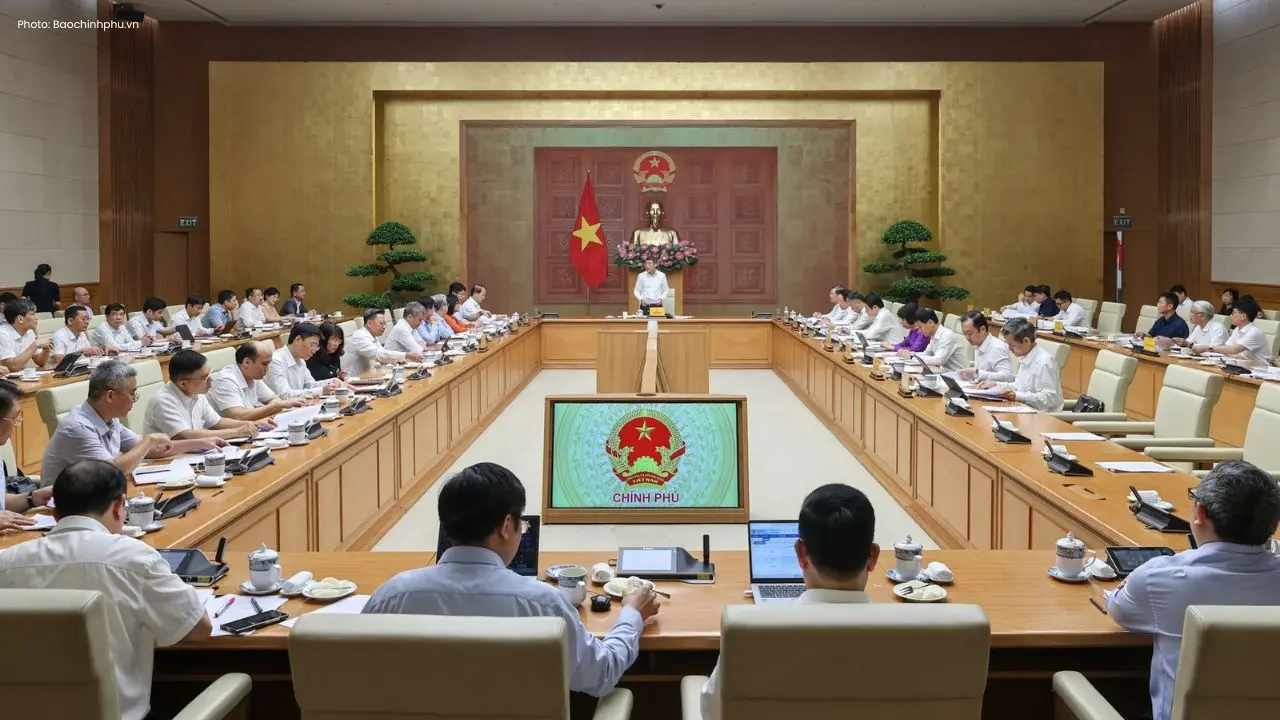
During a crucial session in Hanoi, Vietnam Prime Minister Le Minh Hung convened with the Ministry of Justice, highlighting an urgent need for legal and institutional reforms to fuel the nation’s economic expansion and long-term development. The agenda concentrated on evaluating the Ministry’s achievements since early 2026 and establishing priorities for the future, especially in enhancing legal institutions and administrative processes.
The Prime Minister pinpointed that innovation in legislative processes and law enforcement ranks as one of the crucial national priorities for Vietnam. He underscored the necessity for the legal and institutional apparatus to act as a strategic catalyst for sustainable, double-digit economic growth. According to him, it’s vital for Vietnam’s legal framework to evolve into a modern, transparent, and internationally aligned system that is straightforward to implement.
He commended the Ministry of Justice for its recent initiatives in drafting and assessing laws, minimizing administrative hurdles, and enhancing legal supervision. Officials shared that the Ministry has already executed and forwarded numerous legal documents to the Government and the National Assembly, which includes critical draft laws and resolutions. The Ministry’s reforms aim to simplify investment procedures and eliminate long-standing legal obstacles for businesses and economic activity.
Le Minh Hung reiterated that robust institutional reforms are fundamental to achieving Vietnam’s developmental objectives. He advocated for a shift from antiquated management systems towards more agile and contemporary governance frameworks. He also emphasized the need for increased utilization of digital technologies, artificial intelligence, and big data in law drafting, administrative management, and policy oversight. The Prime Minister urged that legal reforms must translate into tangible benefits for businesses, investors, and the citizenry beyond mere paperwork.
He further emphasized the importance of accountability and discipline within ministries and governmental bodies. He expressed concerns over delays in issuing legal guidelines and criticized redundant regulations that instigate confusion and inefficiency. He directed the Ministry of Justice to strengthen collaborative efforts with other ministries and ensure that legal documentation is practical, transparent, and devoid of corruption or “request-and-grant” practices.
A significant announcement from the meeting included plans to develop a comprehensive national legal database and enhance the use of artificial intelligence in law drafting and reviews. The Ministry of Justice was also tasked with formulating a long-term strategy for enhancing the legal landscape by 2045. Officials noted a keen focus on digital transformation, administrative simplification, and more robust legal risk management as Vietnam seeks deeper international integration.
In addition, the government aims to speed up reforms in civil enforcement, anti-corruption asset recovery, and judicial administration. Prime Minister Le Minh Hung highlighted that a formidable and effective legal system is crucial to unlocking economic resources, boosting investor confidence, and aiding Vietnam’s modernization efforts. Leaders believe these reforms will elevate Vietnam’s position as a more competitive and sustainable economy in the coming years.