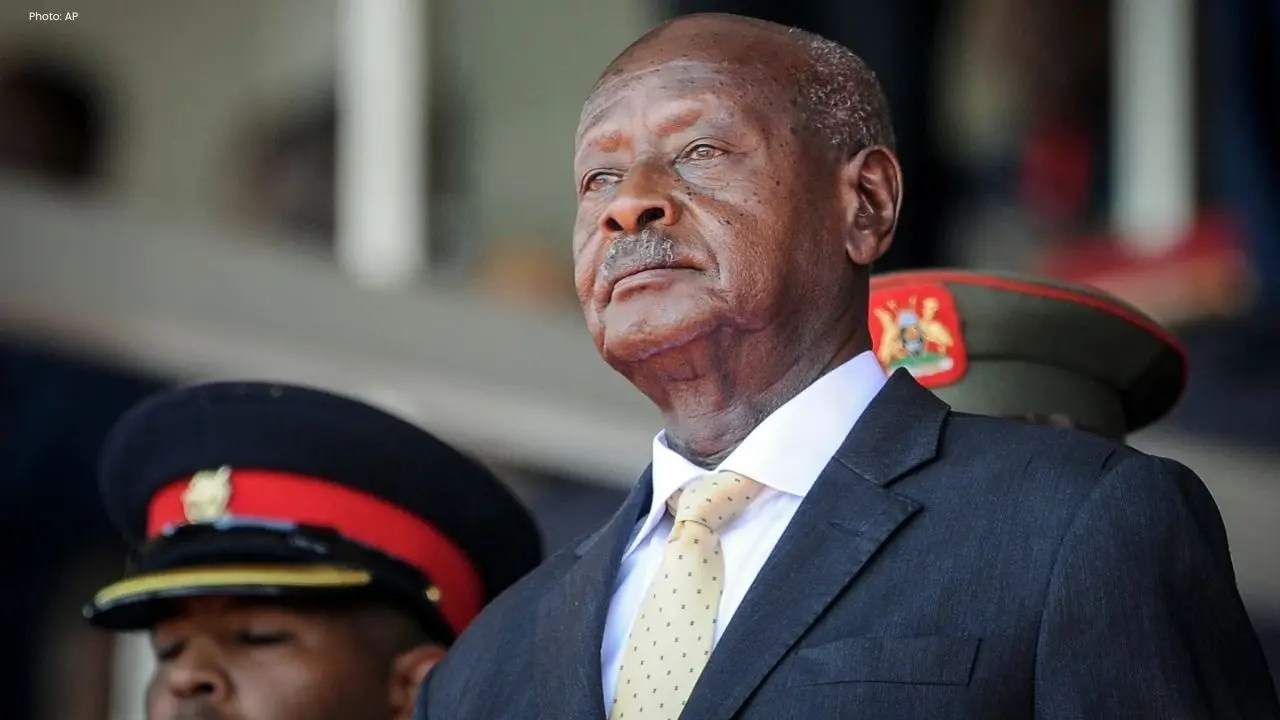
President Yoweri Museveni of Uganda is set to officially commence another five-year presidential term, making him one of the longest-serving leaders in Africa after leading for over four decades. At 81, the incumbent leader's inauguration comes at a time when discussions around a succession plan are gaining momentum, particularly regarding his son, army chief Gen. Muhoozi Kainerugaba. Observers note that Uganda may be entering a critical political transformation as uncertainties loom over the country's future leadership.
The preparations for Museveni’s inauguration featured extensive military drills in Kampala, with fighter jets soaring above the ceremonial grounds and security forces executing large parade exercises. Gen. Muhoozi Kainerugaba played an active role in overseeing the military rehearals, reinforcing the notion that he is becoming a pivotal figure within the nation’s power structure. Political analysts indicate that numerous officials and members of the ruling party exhibit increasing loyalty to Kainerugaba as Museveni ages and gradually cedes authority.
In recent years, discussions about succession have intensified as Kainerugaba has publicly voiced his ambition to succeed his father. Supporters within the ruling National Resistance Movement speculate that constitutional changes or legislative support could pave the way for him to ascend to the presidency. Uganda's parliament, which largely comprises allies of President Museveni, has already seen some prominent lawmakers expressing affirmative views towards Kainerugaba’s political aspirations.
Nonetheless, despite the mounting backing from certain government factions, Kainerugaba’s political trajectory remains ambiguous. Opposition figures, notably prominent musician and politician Bobi Wine, relentlessly challenge the governing body and criticize what they label as authoritarian practices. Wine has dismissed the recent election results, alleging government suppression of democratic rights. Additionally, opposition parties harbor concerns that dynastic leadership may erode Uganda’s democratic frameworks, potentially amplifying military involvement in politics.
Kainerugaba, educated in military academies in the US and UK, has established a strong footprint in Uganda’s military landscape. He is currently at the helm of the armed forces while also leading a political faction named the Patriotic League of Uganda. Amidst portrayals of him as disciplined and resolute, critics express apprehension regarding his assertive public rhetoric and expanding political footprint, which they argue threaten the nation's democratic integrity. Many believe the military could ultimately influence the choice of Uganda’s next leader.
Having taken power in 1986 following a rebel uprising, President Museveni has been credited with ushering in stability and economic growth to Uganda over the years. Still, critics claim his administration has adopted increasingly authoritarian traits, especially after the constitutional amendments that removed age and term limits. Numerous opposition figures and activists have faced legal repercussions and restrictions throughout his tenure.
Moreover, recent legislation ratified by Uganda's parliament has ignited controversy; it imposes strict oversight on organizations receiving substantial foreign donations without government sanction. Opposition and civil society groups argue that this law might be repurposed to hinder dissent and target independent entities. As Museveni embarks on another tenure, many Ugandans and international analysts are keenly observing the political dynamics, eager to see if a smooth and democratic transition of power can be achieved in the years ahead.