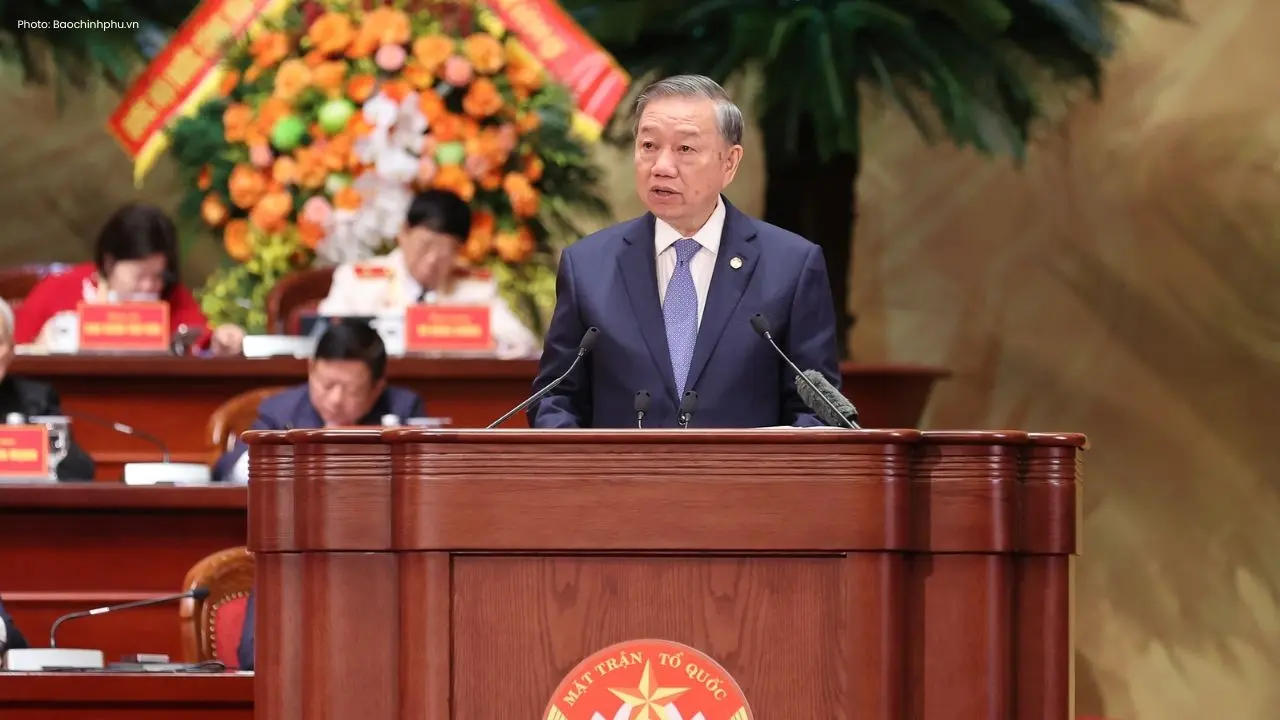
At the 11th National Congress of the Vietnam Fatherland Front, held at Hanoi's National Convention Center, President and General Secretary To Lam delivered a pivotal keynote address. The Congress, which commenced on May 12, saw participation from senior government leaders, officials, delegates, intellectuals, religious representatives, and overseas Vietnamese, all gathering to chart the nation's course for the 2026–2031 period.
In his speech, To Lam underlined that national unity serves as the bedrock of Vietnam’s ongoing growth and stability. He noted that the country is entering a phase of modernization following the successful completion of the 14th National Congress of the Communist Party. To Lam emphasized the need for Vietnam to prioritize prosperity, innovation, democracy, and greater public involvement, ensuring that the citizenry stays at the heart of all reforms.
The President pointed out that the Vietnam Fatherland Front plays a crucial role in connecting the government and the general populace. He called for significant reforms within the organization, advocating for enhanced social oversight, improved public engagement, and the effective use of digital platforms to voice citizen concerns. Additionally, To Lam stressed the need to foster transparency, safeguard public interests, and increase accountability across state institutions.
A major theme of his address was the vital role of social unity amidst rapid economic and technological transformations. He acknowledged the swift evolution of Vietnamese society, marked by urbanization, new industries, and shifting social frameworks. He urged the Front to adopt modern outreach strategies that include hands-on programs, direct engagement, and technology-driven communication pathways, as traditional public mobilization methods are becoming insufficient.
To Lam commended the Fatherland Front and social organizations for their efforts in aiding impoverished communities, disaster-struck areas, and vulnerable groups nationwide. He highlighted initiatives such as the eradication of temporary housing for the needy and extensive welfare campaigns that have uplifted millions, showcasing Vietnam's enduring values of solidarity, compassion, and shared responsibility.
The President also cautioned that the organization must transparently confront its shortcomings, including bureaucratic inefficiencies, inadequate oversight, and slow digital advancement. Officials were urged to engage closely with citizens rather than merely relying on documentation and reports. Leaders are encouraged to actively listen to the public, promptly address concerns, and work to build mutual trust between individuals and the government.
As the Congress advances, it is positioned to finalize pivotal resolutions and strategies for the Vietnam Fatherland Front for the next five years. Leaders anticipate that this event will fortify national unity, enhance governance, and contribute to Vietnam’s long-term aspirations of sustainable development, economic growth, and international integration by 2045.