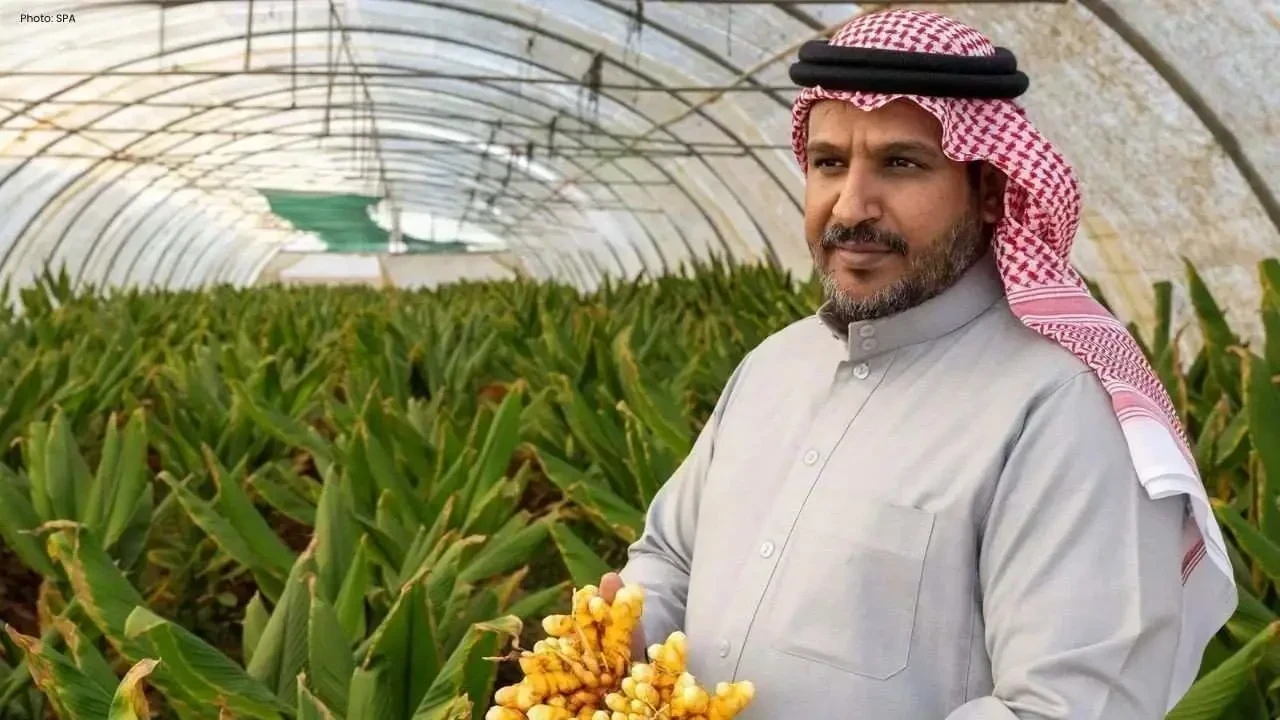
The Tabuk Region is making strides in agricultural advancements by successfully cultivating turmeric for the first time. This milestone indicates the region's ability to diversify its agricultural output with premium crops. Local growers and specialists anticipate that this venture will pave the way for increased profitability and crop diversity in the years ahead.
Farmer Abdulmajeed Al-Atwi emphasized the uniqueness of turmeric in this area, noting its significant nutritional and economic value. As a root plant typically found in semi-tropical environments, turmeric requires meticulous care, optimal seed selection, and timely planting for healthy growth.
According to Al-Atwi, the growth cycle for turmeric spans eight to ten months. Throughout this period, the plant demands consistent watering while avoiding overly saturated soil. To achieve this, farmers utilize controlled irrigation to deliver adequate moisture without causing water damage. He advises combining organic fertilizers with slight amounts of NPK nutrients to enhance growth and produce top-quality yields.
Soil aeration is another vital aspect of turmeric cultivation. Al-Atwi highlighted how drip irrigation techniques promote soil aeration, enabling healthy root development. This irrigation strategy is particularly beneficial in regions requiring careful water management. Thanks to these prudent farming approaches, Tabuk's turmeric has met high-quality standards.
The quality of turmeric continues to be refined even post-harvest. Farmers are responsible for sorting, properly drying the roots, and managing moisture, which directly impacts the marketability of the product. When these post-harvest steps are executed attentively, the turmeric becomes highly sought after.
The turmeric cultivated in Tabuk has quickly gained popularity among local consumers who value its premium quality and regional sourcing, given that turmeric is rarely grown in the vicinity. This uniqueness enhances its perceived market value.
Al-Atwi regards the initiation of turmeric farming as not merely an introduction of a new crop but a pivotal moment for agricultural evolution within the region. He believes that integrating such crops amplifies the agricultural landscape, particularly when aligned with sustainable practices and organic inputs. These techniques are crucial for both environmental preservation and the long-term viability of the farmland.
He also stressed the potential for developing local processing industries around turmeric. This crop can yield various products like oils, powders, and health supplements. Establishing local manufacturing facilities could enhance farmers' economic opportunities and create new jobs in the region.
Farmers view this development as a hopeful model for future agricultural initiatives. The success of turmeric farming illustrates that innovative and valuable crops can thrive in the area, supported by scientific techniques, effective water usage, and modern farming know-how. As Tabuk explores further agricultural opportunities, turmeric stands out as a beacon of progress, sustainability, and economic promise.