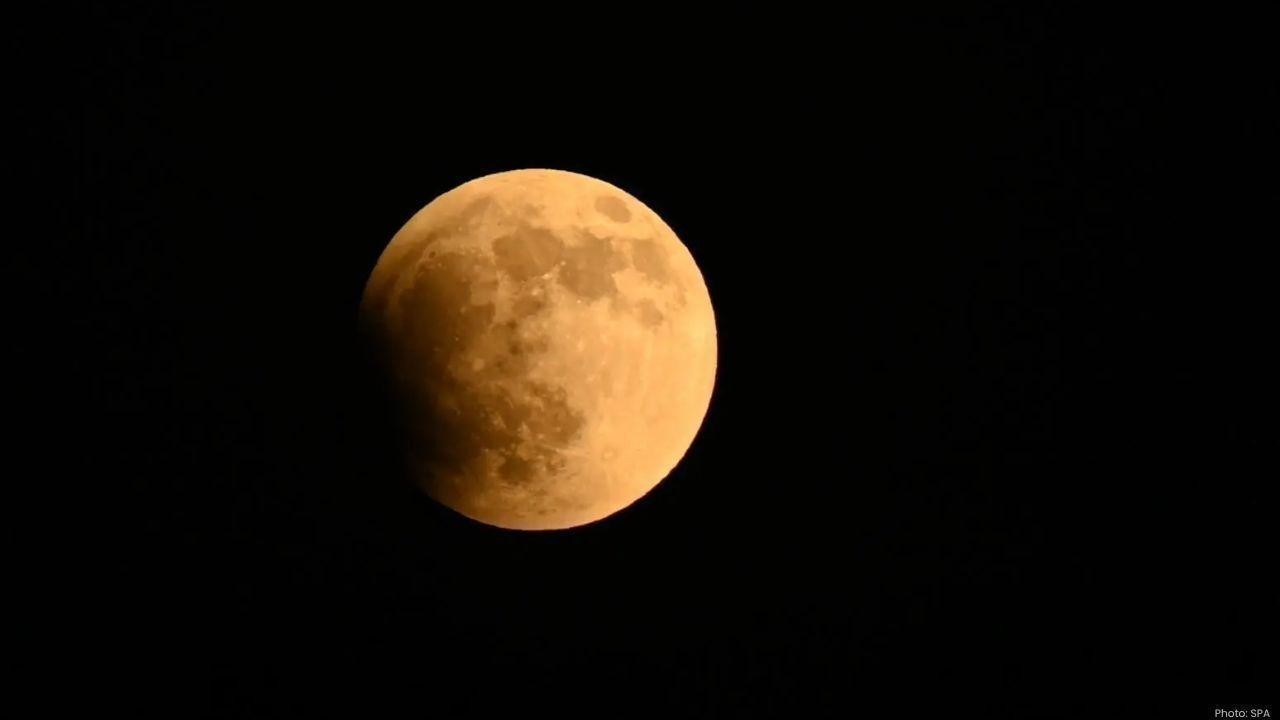
This evening, people across the Kingdom of Saudi Arabia had the rare chance to witness an extraordinary natural phenomenon—a total lunar eclipse, popularly known as the "Blood Moon." During this spectacular event, the moon appeared in a deep crimson red color, captivating sky-watchers and photography enthusiasts alike. The last time a lunar eclipse of this magnitude and visibility was seen in Saudi skies was in 2018.
What Happened in the Sky
The lunar eclipse started with the partial phase, where the moon slowly began to move into the shadow of the Earth. Gradually, as the Earth's shadow covered the moon, it turned from its usual silvery white to a deep, striking red. This transformation marked the beginning of the total lunar eclipse. The total phase lasted for several hours, allowing both casual observers and professional astronomers to enjoy the stunning view.
Stay informed with the latest news. Follow DXB News Network on WhatsApp Channel
Many people chose to watch the eclipse with their naked eyes, while others brought telescopes and cameras for astrophotography. Social media was flooded with pictures and videos of the red moon, showing how this natural spectacle united people in awe of the universe.
Why the Moon Turns Red
Eng. Majed Abu Zahra, Head of the Jeddah Astronomy Society, explained the science behind the Blood Moon. He said that the red color occurs because sunlight passes through the Earth's atmosphere before reaching the moon. During this journey, shorter blue wavelengths are scattered in the atmosphere, while longer red and orange wavelengths continue toward the moon. This natural process makes the moon appear red to observers on Earth.
This fascinating phenomenon has a scientific name called "total lunar eclipse," but its visual effect has captured human imagination for centuries. People have often associated red moons with myths, legends, and cultural stories, though today we understand the science behind this magical sight.
Astronomy Enthusiasts Celebrate the Event
Sky-watchers, amateur astronomers, and professional photographers gathered in different parts of Saudi Arabia to witness the Blood Moon. Parks, rooftops, and open desert areas became popular spots for observing the event. Families brought children to give them a first-hand experience of this rare astronomical wonder. Many students and young learners expressed their excitement at seeing something they had only read about in books or seen in videos.
For astronomers, the Blood Moon was more than a beautiful sight. It was an opportunity to study the moon, the Earth's shadow, and the way sunlight interacts with the atmosphere. Cameras and telescopes captured stunning details, including the gradual shading of the moon and the deep red hue during totality.
Part of a Series of Astronomical Events
This total lunar eclipse is just one of several astronomical events happening in Saudi Arabia this year. Observing these events is an important reminder of the vastness and beauty of the universe. Events like lunar eclipses, meteor showers, and planetary alignments help both scientists and the general public understand more about space.
By watching these natural phenomena, people learn not only about astronomy but also about the scientific principles behind them. It encourages curiosity and inspires young learners to explore the universe. Schools and educational organizations often arrange events and discussions around these celestial events to educate students in a hands-on way.
A Night to Remember
The Blood Moon lunar eclipse left a lasting impression on everyone who witnessed it. For many, it was an unforgettable moment of wonder and connection with the universe. Children asked questions about why the moon changed color, how often eclipses happen, and what other celestial events they could watch in the future. Parents, teachers, and community members shared the experience together, creating memories that will be cherished for years.
Astronomers also reminded the public that these events are safe to watch with the naked eye, unlike solar eclipses, which require protective glasses. They encouraged everyone to keep observing the night sky and continue learning about the mysteries of space.
Encouraging Curiosity and Learning
Events like the Blood Moon lunar eclipse show how science and nature can inspire wonder in people of all ages. For students, witnessing a lunar eclipse can spark a lifelong interest in astronomy, physics, and space exploration. For the general public, it is a reminder of the beauty and complexity of the natural world.
Eng. Majed Abu Zahra emphasized that observing natural events like eclipses is not just about entertainment; it is a way to understand the universe, its patterns, and the science that governs it. By watching and learning about these events, people gain a deeper appreciation of nature and its amazing phenomena.
The total lunar eclipse, or Blood Moon, that lit up the skies of Saudi Arabia this evening was a rare and mesmerizing event. From the gradual movement of the moon into Earth's shadow to its deep red glow during totality, the spectacle was a reminder of the wonders of the universe. It brought together astronomy enthusiasts, families, and young learners, all sharing the excitement of witnessing one of nature's most beautiful displays.
As Saudi Arabia continues to experience more celestial events throughout the year, the Blood Moon will be remembered as a night of awe, learning, and inspiration, encouraging people to keep looking up at the skies and exploring the universe around them.