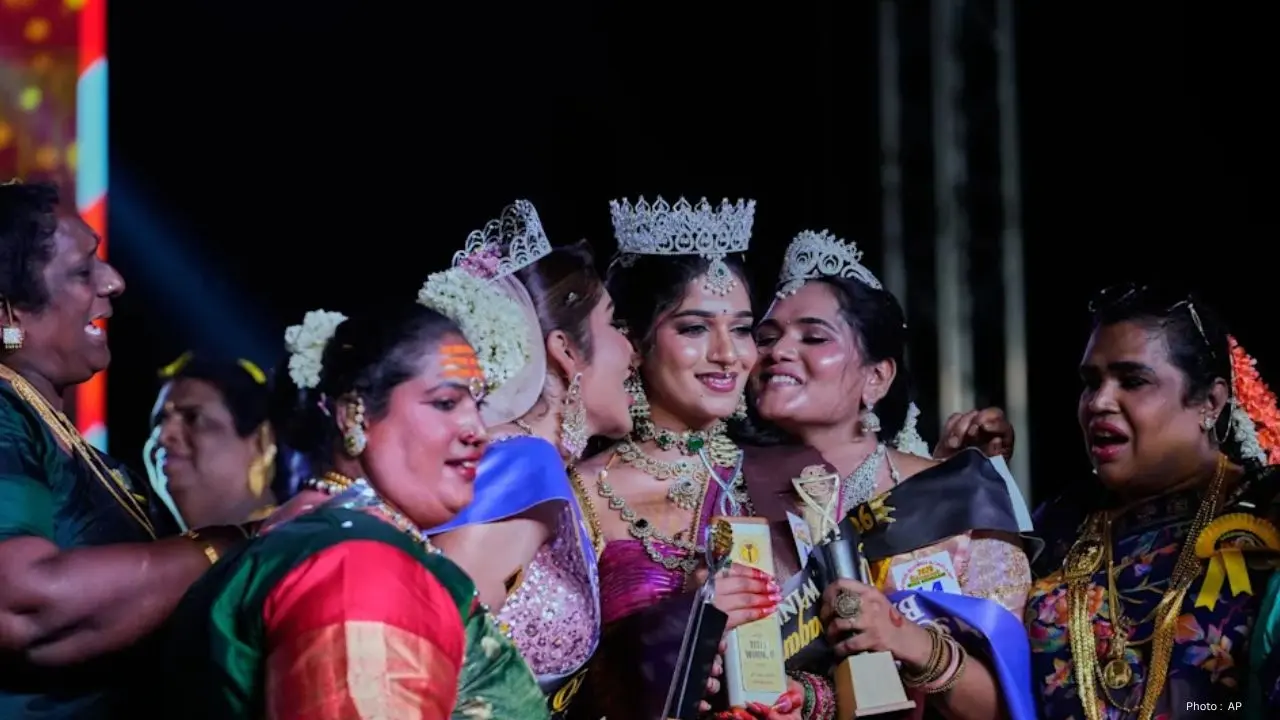
The annual Koovagam festival in Tamil Nadu stands as one of the most significant congregations of the transgender community, intertwining spirituality, culture, and identity in a profound celebration. Each year, thousands journey to Koovagam village for this remarkable event.
Central to the festival is a narrative from the revered Hindu epic Mahabharata, revolving around the figure of Aravan. This hero was sacrificed to ensure victory in battle yet yearned for marital union prior to his death. In a divine act, Lord Krishna took on a female guise to wed Aravan, a tale that forms the backbone of the rituals held during the festival.
During the festivities, transgender women symbolically unite in “marriage” to Aravan at a temple. Rituals are performed by priests, with attendees adorning traditional attire, floral decorations, and marriage emblems. This sacred moment evokes deep emotions, faith, and a strong sense of community among participants.
The celebration then transitions dramatically, with the following day symbolizing Aravan’s death. Mourning rites follow, where participants shed their marriage symbols, break bangles, and don white garments representing widowhood. This poignant shift from joy to sorrow is an essential component of their tradition.
In addition to the religious aspects, the festival hosts cultural performances, including dance and the celebrated Miss Koovagam beauty pageant, providing a platform for self-expression, confidence-building, and embracing one’s identity.
For many within the transgender community, Koovagam transcends being a mere festival; it is an exceptional space allowing openness and acceptance, a refuge from societal discrimination. Attendees often express a sense of safety and inclusion, which is hard to find in everyday life.
The event also shines a light on the societal hurdles that transgender people face in India, such as difficulties in education, employment, housing, and healthcare. As such, the festival serves not only as a cultural festivity but also as a vital source of emotional solidarity.
Over the years, Koovagam has evolved into a powerful emblem of visibility and advocacy for transgender rights, spotlighting the ongoing pursuit of equality and acceptance while safeguarding a legacy that spans centuries.
Despite the challenges that persist, the festival pulses with a vibrant spirit, filled with music, rituals, and communal gatherings transforming the village into a sanctuary of celebration and reflection.
The Koovagam festival remains a distinctive portrayal of how tradition and identity harmonize, providing profound spiritual significance and belonging to thousands each year.