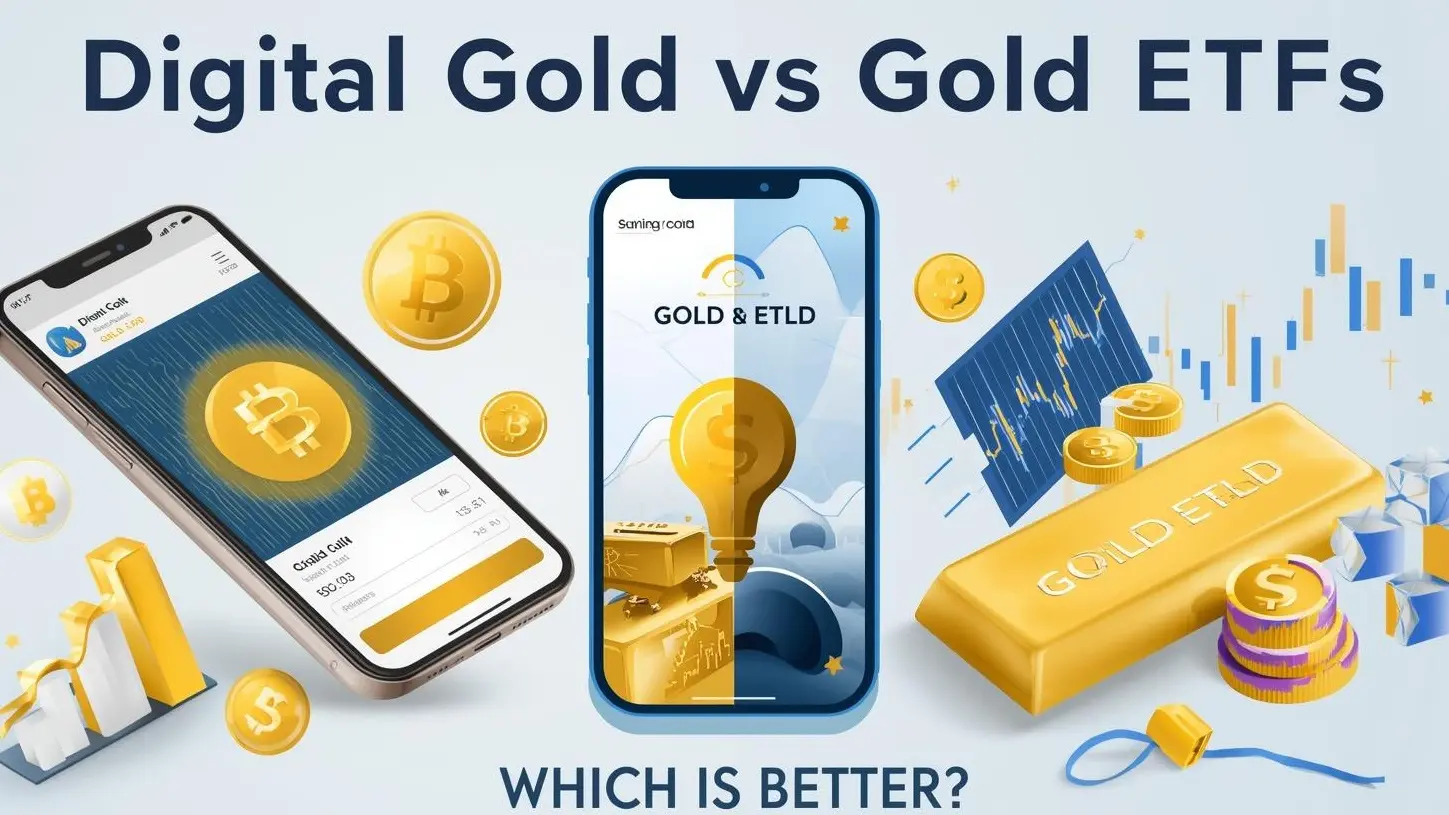
Want to Invest in Gold Alternatives? Here Are the Differences Between Digital Gold and Gold ETFs, Explained
Why investors are moving beyond physical gold
For generations, gold has been one of the most trusted forms of investment, especially in countries like India where it carries both cultural and financial value. Traditionally, people invested in physical gold—jewelry, coins, or bars. But over time, this approach has started to change.
Modern investors are now exploring smarter and more flexible options such as digital gold and gold exchange-traded funds. These alternatives remove many of the challenges associated with physical gold, such as storage, safety, and making charges. They also make it easier for people to invest in gold without needing large amounts of money upfront.
As awareness grows, many first-time investors are asking an important question: what is the difference between digital gold and gold ETFs, and which one is better?
Understanding what digital gold really means
Digital gold is a relatively new way of investing in gold where you buy gold online in a digital form. When you invest in digital gold, you are essentially purchasing real gold that is stored securely by a provider on your behalf.
Platforms like Paytm, PhonePe, and Google Pay have made this option easily accessible. You can start investing with a small amount, sometimes as low as a few rupees, which makes it attractive for beginners.
The gold you buy is usually backed by physical gold stored in secure vaults, and you can sell it anytime through the platform. Some services even allow you to convert your digital gold into physical gold if needed.
What are gold ETFs and how do they work
Gold ETFs, or Exchange-Traded Funds, are investment products that track the price of gold and are traded on stock exchanges. Instead of buying physical gold, you buy units of a fund that represents gold.
In India, gold ETFs are regulated by Securities and Exchange Board of India, which ensures transparency and investor protection.
When you invest in a gold ETF, you are not directly owning physical gold. Instead, you own units that reflect the market price of gold. These units can be bought and sold on stock exchanges just like shares.
This makes gold ETFs a more structured and regulated way of investing in gold.
Key difference in ownership and structure
One of the biggest differences between digital gold and gold ETFs lies in how ownership works.
With digital gold, you are technically buying real gold stored in your name. Even though you don’t physically hold it, it is backed by actual gold.
On the other hand, gold ETFs represent gold in a financial form. You own units of a fund, not the physical gold itself.
This difference affects how the investment behaves, how it is regulated, and how it can be used.
Accessibility and ease of investment for beginners
Digital gold is often considered more beginner-friendly because of its simplicity. You can invest directly through mobile apps without needing a trading account or complex procedures.
Gold ETFs, however, require:
- A demat account
- A trading account
- Basic understanding of stock market operations
While ETFs offer more structure, they may feel slightly complex for someone new to investing.
Liquidity and ease of selling your investment
Liquidity refers to how easily you can buy or sell your investment.
Digital gold can usually be sold instantly through the app you used to buy it. However, the price may vary slightly depending on the platform.
Gold ETFs are traded on stock exchanges, which means you can buy or sell them during market hours. Their pricing is more transparent and directly linked to market rates.
Both options offer good liquidity, but ETFs provide more consistency in pricing.
Safety and regulation differences you should know
Safety is a crucial factor when choosing an investment.
Gold ETFs are regulated by SEBI, making them more secure and transparent. The involvement of regulatory authorities ensures better protection for investors.
Digital gold, while backed by physical gold, is not regulated in the same way. It depends on the credibility of the platform you are using.
This makes ETFs a safer option for long-term investors who prioritize security.
Costs and charges involved in both options
When investing in digital gold, you may encounter:
- Spread between buying and selling price
- Storage charges in some cases
Gold ETFs, on the other hand, involve:
- Expense ratio (management fee)
- Brokerage charges
Both options have costs, but the structure is different. Understanding these charges helps you calculate your actual returns.
Investment flexibility and long-term suitability
Digital gold is ideal for short-term or small investments. It allows you to invest gradually without committing large amounts.
Gold ETFs are better suited for long-term investment strategies. They integrate well into diversified portfolios and are more aligned with financial planning.
Your choice depends on your goals—whether you want convenience or structured investing.
Taxation differences between digital gold and gold ETFs
Taxation is another important factor to consider.
Digital gold is treated like physical gold for tax purposes. Capital gains tax applies depending on how long you hold the investment.
Gold ETFs also attract capital gains tax, but the rules may vary slightly depending on holding period and regulations.
Consulting a financial expert can help you understand the tax implications better.
Which option is better for you
There is no one-size-fits-all answer.
If you are a beginner looking for a simple and flexible way to invest small amounts, digital gold can be a good starting point.
If you are a serious investor looking for transparency, regulation, and long-term growth, gold ETFs may be a better choice.
Understanding your financial goals is the key to making the right decision.
Choose based on knowledge, not trends
Gold remains a valuable investment, but how you invest in it matters.
Digital gold and gold ETFs both offer advantages, but they serve different purposes. Instead of following trends, focus on what suits your needs, risk tolerance, and investment strategy.
Making an informed decision today can help you build a stronger financial future.
Disclaimer
This article is for informational purposes only and does not constitute financial advice. Investment decisions should be made after proper research or consultation with a certified financial advisor.