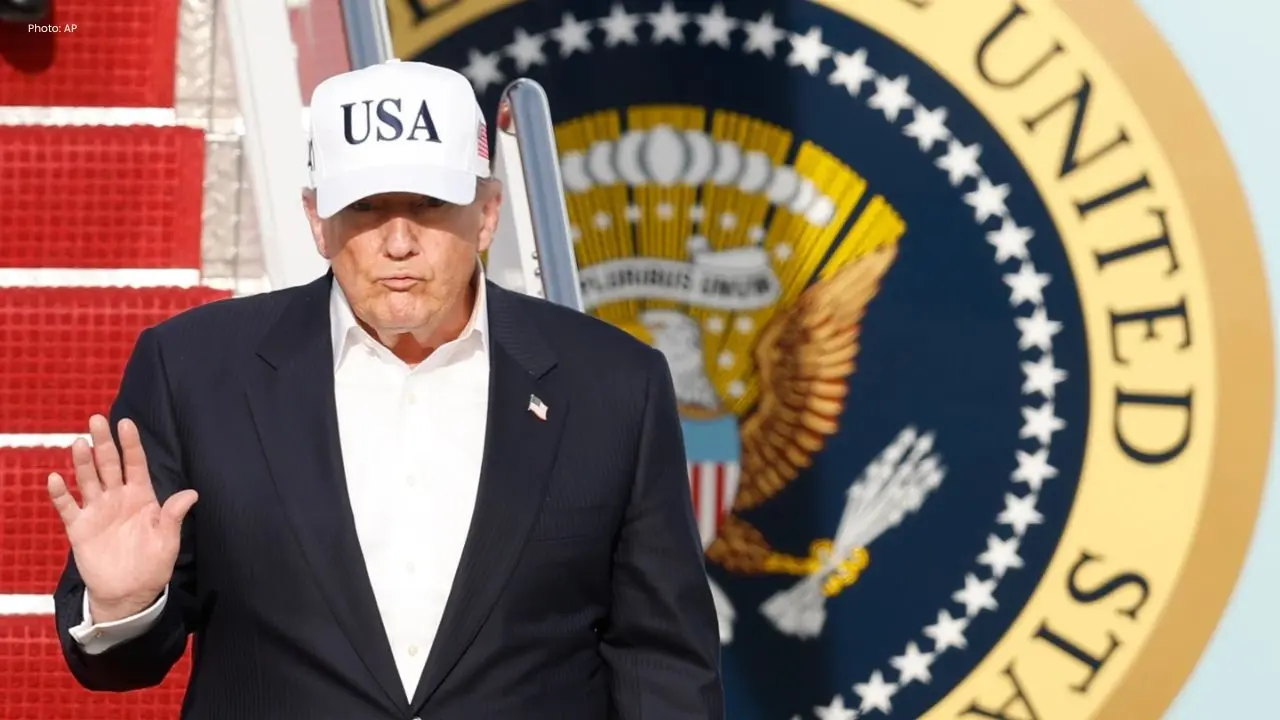
As tensions heighten around the Strait of Hormuz, US President Donald Trump is navigating complicated challenges with Iran, marked by ongoing threats, military posturing, and diplomatic maneuvers.
In a recent development, Trump revealed that he had delayed a substantial military operation against Iran at the request of Gulf Arab partners, indicating that serious discussions are currently in play. Nonetheless, he cautioned that military options remain on the table if a satisfactory agreement is not attained.
The enduring standoff underscores Iran's significant role in the Strait of Hormuz, a crucial artery for global oil shipping. Despite America's intensified military presence and sanctions, Iran has yet to budge on key points regarding its nuclear activities, missile advancements, or international alliances.
The rising conflict has stirred instability within global energy markets, leading to increasing fuel costs and economic trepidation in various nations. Analysts suggest that the ongoing scenario is intensifying political pressure on the Trump administration as election season approaches in the United States.
Officials at the White House backed Trump's approach, emphasizing his preference for diplomacy while remaining ready for military engagement if warranted. They conveyed a commitment to preventing Iran from advancing its nuclear capabilities and stressed that the US still holds strategic advantages in this confrontation.
In response, Iranian officials affirmed their military readiness as diplomatic initiatives progress. Tehran further cautioned that any escalation could lead to severe repercussions throughout the region, particularly in the Strait of Hormuz.
Experts have characterized the current situation as a precarious stalemate, where both Washington and Tehran perceive time may be on their side. Analysts pointed out that Iran's control over an essential oil transit route provides it leverage that many nations under US pressure have not enjoyed.
Political analysts suggest that while Trump's pressure tactics have yielded results in other contexts, they appear less effective in regard to Iran, given its regional influence, military strength, and strategic clout over global energy pathways. The fragile ceasefire and ongoing discussions continue to keep the Middle East on high alert.