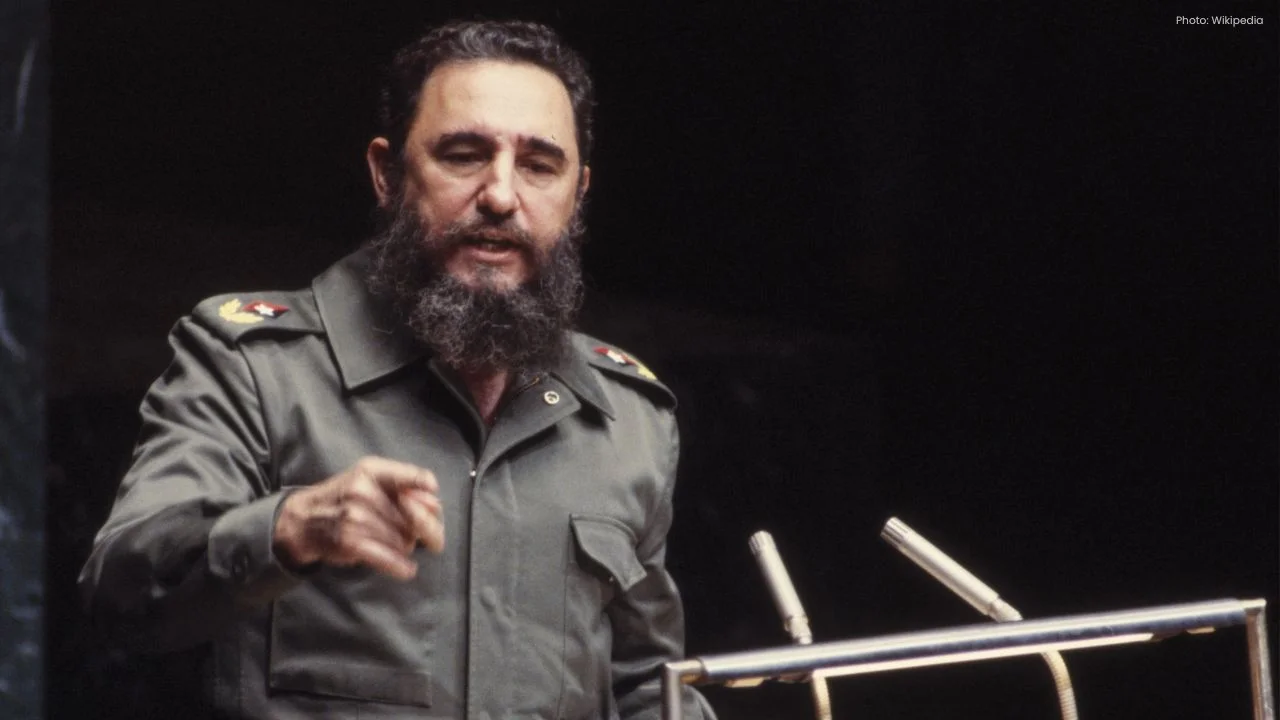
Being the child of one of the most powerful and controversial leaders in modern history may sound, from the outside, like a life filled with privilege, influence, and protection. But for the daughter of Fidel Castro, life was never simple. Behind the revolutionary speeches, military uniforms, giant portraits, and political mythology surrounding Cuba existed another reality few people truly saw — the emotional burden of being born inside history itself.
For decades, the Castro name shaped the destiny of Cuba. To supporters, Fidel Castro was a revolutionary hero who defended Cuban sovereignty against global superpowers. To critics, he was an authoritarian leader who controlled nearly every aspect of Cuban life and silenced political dissent.
Yet one of the most fascinating voices to emerge from that complicated legacy came from inside the family itself.
Fidel Castro’s daughter became one of the most unexpected critics of the Cuban regime — while simultaneously warning outsiders not to underestimate the political system her father built.
That contradiction reveals something much deeper about Cuba itself.
Growing Up Inside a Revolution
For ordinary Cubans, Fidel Castro often appeared larger than life — a distant national figure shaping the future of an entire country. But for his daughter, he was also simply “father.” That emotional duality created confusion from an early age. Imagine growing up in a household where the man sitting at the dinner table also controlled the fate of millions of people.
Inside revolutionary families, private life rarely remains truly private.
Politics enters everything.
Conversations become careful.
Trust becomes complicated.
Loyalty becomes expected.
Children born into powerful political families often inherit not only privilege, but also pressure. For Castro’s daughter, growing up under the shadow of revolution meant balancing admiration, fear, love, disappointment, and rebellion all at once.
Many people assume the children of political leaders automatically share their parents’ ideology.
Reality is rarely that simple.
Sometimes, proximity reveals truths outsiders never fully see.
The Cuba the World Imagined
For decades, Cuba fascinated the outside world. To many foreigners, the island looked romantic — colorful streets, vintage American cars, cigars, salsa music, revolutionary posters, and defiant speeches against powerful nations. To others, Cuba represented censorship, shortages, restricted freedoms, and economic struggle.
The truth, however, existed somewhere far more complicated.
Many Cubans experienced enormous pride in their culture and national identity while simultaneously living through political limitations and economic hardship. This emotional contradiction became deeply embedded into daily life on the island.
And Castro’s daughter witnessed that contradiction more intimately than most people ever could.
One of the most emotionally difficult realities for children of political leaders is separating the human being from the political machine. A daughter may deeply love her father while strongly rejecting what his government became over time.
That emotional split shaped much of her public identity.
She openly criticized aspects of the Cuban regime, questioned many of its methods, and distanced herself from parts of the political system associated with her father’s rule. Yet despite her criticism, she also understood something outsiders often misunderstood:
The Cuban regime was far more resilient than many people assumed.
Why She Warned the World Not to Underestimate Cuba
Many international observers predicted the collapse of Cuba’s political system repeatedly over the decades. Yet the regime survived economic crises, sanctions, diplomatic isolation, leadership transitions, and enormous geopolitical pressure. Castro’s daughter reportedly understood why.
Because the Cuban system was never built only on fear.
It was built on narrative, symbolism, nationalism, survival psychology, and revolutionary identity deeply woven into Cuban society itself.
That made it emotionally difficult to dismantle, even for people who disagreed with it politically.
Cubans were raised inside a culture shaped by sacrifice, endurance, resistance, and survival. Even many critics of the government still carried emotional loyalty to Cuban identity itself. Foreign observers often misunderstood Cuba by analyzing it purely through politics, while ignoring how deeply history, pride, survival, and revolutionary memory were emotionally connected inside the country.
This distinction mattered enormously.
Governments can collapse quickly.
Myths often survive generations.
And perhaps nobody understood that emotional reality better than someone raised inside the heart of the revolution itself.
The Emotional Burden of Carrying the Castro Name
One of the least discussed aspects of powerful political families is isolation. Famous surnames can become emotional prisons. People either fear you, admire you, resent you, or attempt to use you. Very few interact naturally.
For Fidel Castro’s daughter, carrying the Castro name meant never fully escaping history. Every public statement became political. Every disagreement attracted international attention. Even personal choices turned into symbolic discussions about Cuba itself.
That emotional pressure can become exhausting.
Many children of historical figures spend their lives trying to answer one impossible question:
Who am I outside my family legacy?
There are also untold psychological pressures attached to growing up around revolutionary power. While ordinary children worry about school, friendships, or hobbies, children inside political dynasties often grow up surrounded by secrecy, security, ideological expectations, and constant political tension.
Imagine realizing as a child that millions of strangers either worship or despise your father.
Imagine hearing endless debates about whether your family changed history for better or worse.
That type of pressure leaves permanent emotional marks.
Perhaps this explains why some children of powerful leaders eventually rebel publicly — not always because they hate their parents personally, but because they desperately want an identity separate from inherited history.
Cuba’s Future and the Shadow of Revolution
Even after the death of Fidel Castro, Cuba remains symbolically powerful around the world. The island represents far more than geography. It symbolizes ideological endurance, Cold War memory, revolutionary mythology, survival, and resistance against overwhelming pressure.
At the same time, modern Cuba faces enormous challenges:
Economic hardship.
Youth migration.
Political frustration.
Generational division.
Global change.
Younger Cubans increasingly question older revolutionary narratives, while many older generations remain emotionally attached to memories of resistance and national pride. This creates a country psychologically divided between nostalgia and exhaustion, memory and change, pride and frustration.
And perhaps Castro’s daughter understood that divide better than almost anyone else.
Because she herself embodied contradiction.
Born inside revolution.
Emotionally shaped by it.
Yet unwilling to fully surrender to it.
Ultimately, her story is not simply about communism, politics, or ideology. It is about inheritance, identity, emotional conflict, and the burden children carry from powerful parents.
It is also a reminder that nations, like families, are rarely purely good or purely bad.
They are complicated.
Wounded.
Proud.
Beautiful.
Broken.
Human.
And perhaps that complexity is exactly why Cuba continues fascinating the world decades after the revolution first changed the island forever.