On May 7, 2026, global financial markets experienced a notable surge as investors responded enthusiastically to potential peace discussions between the United States and Iran, alongside robust growth in the artificial intelligence sector. Major stock indices across Asia, Europe, and the United States achieved record levels, while oil prices plummeted, fostering a wave of optimism globally.
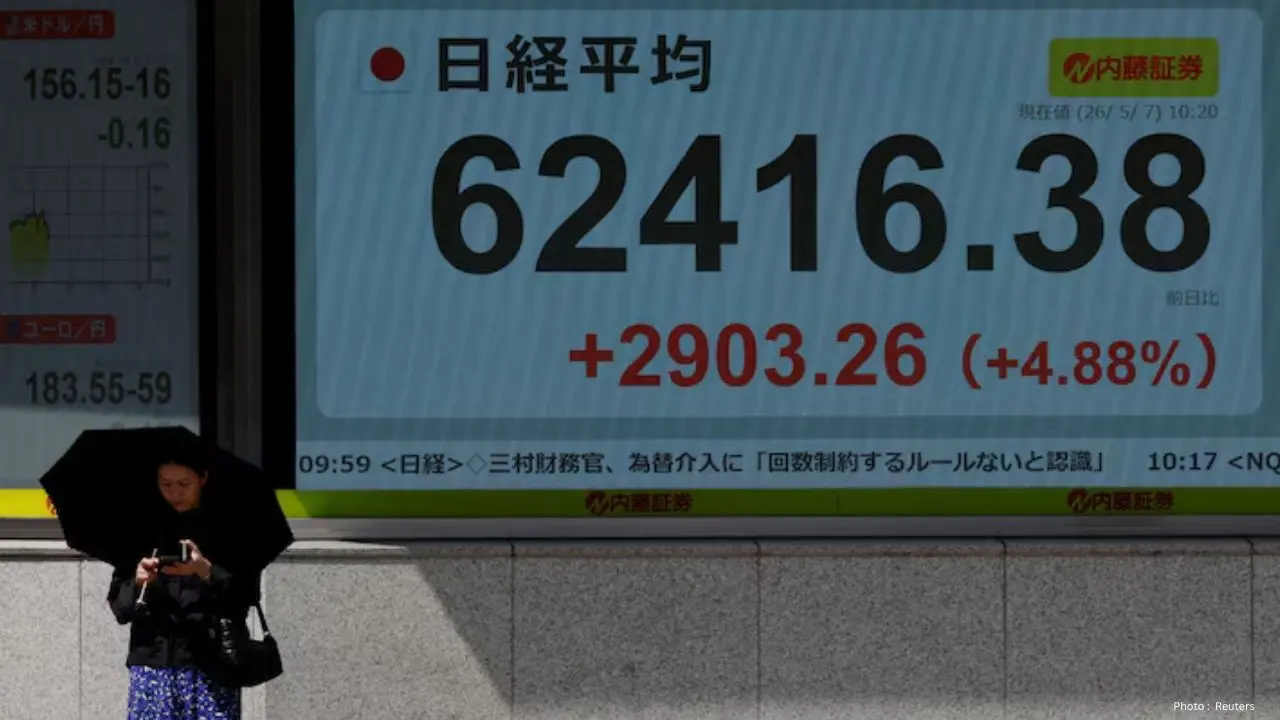
Leading the charge, Asian markets rallied impressively, with Japan’s Nikkei index breaking the significant 62,000 mark following a holiday hiatus. South Korea and Taiwan also recorded their own historic highs, driven by booming technology firms benefiting from the heightened enthusiasm surrounding AI investments.
This bullish sentiment was significantly fueled by speculation that Washington and Tehran might reach a temporary peace accord aimed at de-escalating tensions in the Middle East. Investors are optimistic that easing conflict could stabilize oil supplies, thus alleviating inflation and energy cost pressures.
In direct response to the news of potential peace, Brent crude oil prices experienced a sharp decline after a period of volatility linked to tensions in the crucial Strait of Hormuz. The decrease in oil prices alleviated concerns about rising inflation and potential economic deceleration.
The rally in global markets was also propelled by impressive earnings from leading technology players, especially those within the artificial intelligence domain. Chipmakers and semiconductor firms attracted considerable investor attention as demand for AI technology surged across multiple sectors.
Shares of leading tech companies saw significant increases after various firms reported earnings surpassing expectations, coupled with announcements of major investments geared towards AI infrastructure. Investors are increasingly convinced that AI will emerge as a principal driver of economic growth in the upcoming decade.
In the U.S., Wall Street indices continued their upward trajectory, with the Nasdaq and S&P 500 reaching new milestones as capital flowed into tech and AI-focused enterprises. Analysts noted a prevailing ‘risk-on’ sentiment, with investors eager to acquire stocks amid improving global conditions.
The AI phenomenon has swiftly become a salient force in global markets throughout 2026. Companies engaged in semiconductor production, cloud computing, data centers, and AI software have witnessed substantial market value growth. Some Asian tech titans have even crossed the coveted trillion-dollar valuation, reflecting investor excitement regarding AI expansion.
Simultaneously, the currency market mirrored shifting investor perceptions. The U.S. dollar weakened against other major currencies as investors opted out of safe-haven assets amid rising hope for Middle East peace. Conversely, the Japanese yen appreciated considerably, partially attributed to speculation regarding potential interventions by Japanese authorities.
Government bonds also reacted positively, with yields in various countries declining as lower oil prices mitigated fears surrounding long-term inflation. Investors surmise that central banks may experience less pressure to uphold high interest rates if energy prices continue on a downward trajectory.
However, experts caution that financial markets remain extremely sensitive to geopolitical events. The current relationship between the United States and Iran is still precarious, as significant disagreements linger over issues such as Iran’s nuclear ambitions and control of the Strait of Hormuz. A breakdown in peace negotiations could potentially reverse existing market optimism.
A mere few days prior, global markets faced significant volatility, propelled by escalating concerns about Middle Eastern conflicts. Oil prices had spiked above $110 per barrel amid apprehensions regarding supply disruptions and military escalation in the Gulf region.
This latest market rally illustrates the tight interconnection of global economies with geopolitical developments. Trends in energy prices, inflation, stock markets, and interest rates are all heavily influenced by situations in major conflict areas like the Middle East.
Another vital contributor to this investor optimism is the resilience of global economies, despite ongoing political strife. Numerous emerging markets have displayed robust performance, even during periods of elevated oil prices and international uncertainty. Analysts attribute this to stronger financial foundations and a sustained demand for sectors driven by technology.
Nevertheless, some economists express caution regarding the future. They warn that stock markets may be experiencing unsustainable growth due to the exuberance surrounding AI and unconfirmed peace agreements. Lingering concerns about inflation, government debt, and potential economic slowdowns in certain nations persist.
The Federal Reserve and other central banks are closely monitoring these developments. Persistently high oil prices amid the Iran conflict heightened inflation fears and raised concerns about supply chain disruptions. While the recent fall in oil prices has offered temporary respite, policymakers remain vigilant regarding long-term economic risks.
For investors, the convergence of falling oil prices, potential Middle East peace, and ongoing AI expansion has ignited one of the year's most formidable market rallies thus far. The financial landscape now closely observes whether diplomatic advancements between the United States and Iran will sustain momentum in the upcoming days.
This rally serves as a reminder of how swiftly and powerfully global markets can react to both political shifts and technological advancements. While current sentiment appears favorable, experts caution that high uncertainty persists, and markets may exhibit volatility should geopolitical tensions escalate once more.