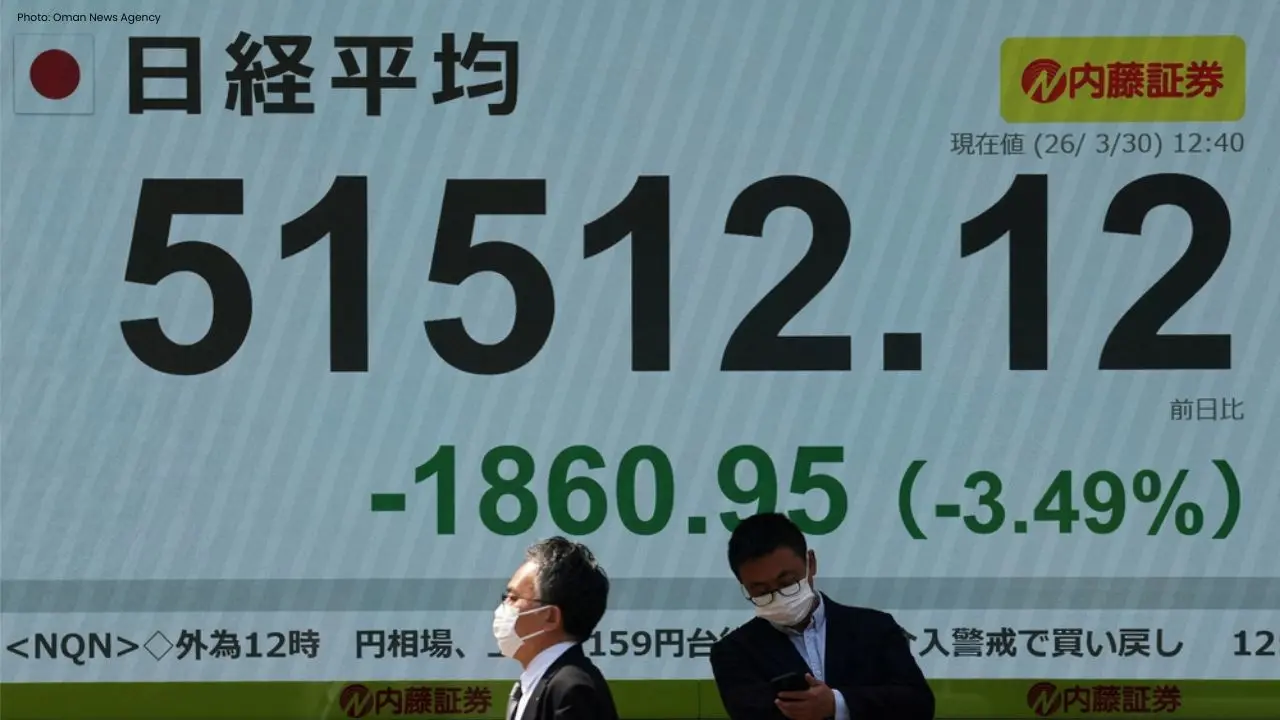
Asian equity markets experienced a substantial increase in foreign sell-offs in May, driven by heightened apprehensions over global inflation, escalating borrowing costs, and ongoing geopolitical uncertainties affecting investor confidence throughout the region.
Recent data from Reuters reveals that foreign investors have offloaded close to $24.75 billion in Asian stocks this month alone, with the last week witnessing an astonishing $17.27 billion in outflows—marking one of the most significant weekly foreign sell-offs in recent memory.
Selling pressure surged following the rise of the 30-year US Treasury yield, which hit its peak since 2007. Typically, rising bond yields render equities less appealing, as investors opt for the more secure returns offered by government bonds, particularly during economic uncertainty.
Experts suggest that the ongoing inflation worries, exacerbated by conflicts and tighter financial conditions, are pushing investors to minimize their stakes in fast-growing Asian markets. The tech-dominated markets in South Korea and Taiwan have been especially hard-hit in this wave of market corrections.
South Korean equities experienced unprecedented foreign withdrawals of roughly $13.14 billion over just one week. Taiwan faced heavy selling as well, with outflows nearing $2.88 billion, while Indian stocks saw foreign exits totaling nearly $1.35 billion during the same timeframe.
Market analysts noted that Asian equities remain highly susceptible to fluctuations in US bond yields. Investors are increasingly wary that sustained high interest rates could negatively impact corporate earnings and overall economic growth in Asia's export-driven markets.
Even amid broader market challenges, certain nations have managed to draw foreign investments. Indonesian stocks saw infusions of about $511 million, while Thailand experienced foreign buying of around $215 million, indicating selective investor confidence in specific Southeast Asian markets.
Financial analysts caution that volatility may persist in the upcoming weeks as market participants closely watch inflation patterns, central bank actions, and global geopolitical developments that could further sway capital flows and market stability.