AI Tools Adoption Grows Rapidly: How Businesses Are Using Them
In 2026, the adoption of AI tools is growing at an incredible pace. Businesses of all sizes—from startups to large corporations—are using artificial intelligence to improve efficiency, reduce costs, and stay competitive.
What once seemed like advanced technology is now becoming a daily part of business operations. Companies are not just experimenting with AI anymore—they are actively integrating it into their workflows.
The big question is:
How exactly are businesses using AI tools, and why is adoption increasing so fast?
Why AI Adoption Is Growing So Quickly
The rapid growth of AI adoption is driven by its ability to solve real business problems.
One major reason is automation. AI can handle repetitive tasks like data entry, customer responses, and scheduling, saving time and reducing human effort.
Another factor is cost efficiency. Businesses can reduce operational expenses by automating processes and improving accuracy.
AI also helps in better decision-making. With access to large amounts of data, companies can analyze trends and make smarter business decisions.
Additionally, AI tools are becoming more accessible and user-friendly. Even small businesses can now use AI without needing advanced technical knowledge.
How Businesses Are Using AI Tools
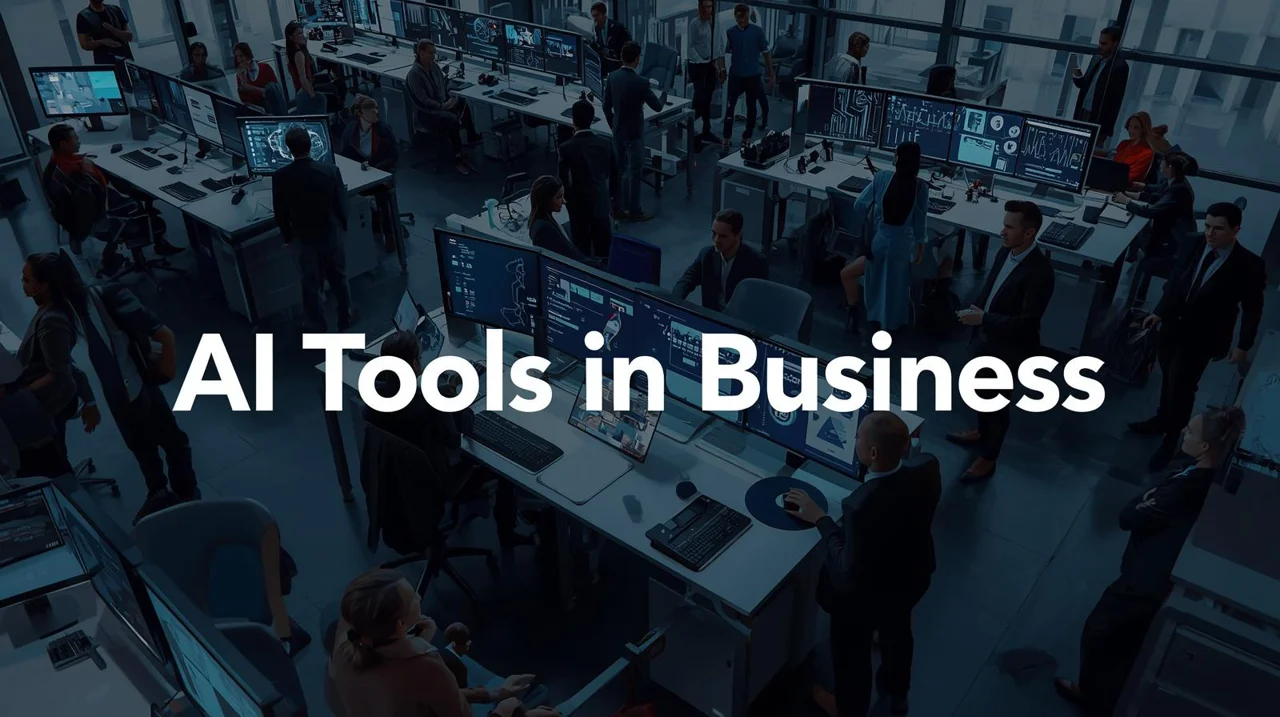
AI is being used across multiple areas of business, transforming how companies operate.
One of the most common uses is in customer service. AI-powered chatbots and virtual assistants can handle customer queries instantly, improving response time and customer satisfaction.
In marketing, AI is helping businesses with content creation, audience targeting, and campaign optimization. Companies can create personalized marketing strategies based on customer behavior.
AI is also widely used in data analysis. Businesses collect large amounts of data, and AI tools help process and interpret this data quickly, providing valuable insights.
Another important area is sales automation. AI tools can predict customer needs, recommend products, and improve conversion rates.
In operations, AI is used for inventory management, demand forecasting, and process optimization, helping businesses run more efficiently.
Benefits of Using AI in Business
The adoption of AI tools offers several advantages.
Businesses can save time by automating routine tasks. This allows employees to focus on more important and creative work.
Accuracy improves as AI reduces human errors, especially in data-related tasks.
Customer experience becomes better with faster responses and personalized services.
AI also helps businesses scale faster. With automation and data insights, companies can grow without significantly increasing costs.
Challenges Businesses Should Be Aware Of
Despite its benefits, AI adoption comes with challenges.
One major challenge is implementation cost. While many tools are affordable, advanced solutions can still require investment.
Data privacy and security are also concerns. Businesses must ensure that customer data is handled safely.
Another challenge is the need for proper understanding. Without the right strategy, businesses may not get the full benefit of AI tools.
There is also the issue of over-dependence. Relying too much on automation without human oversight can lead to mistakes.
Future of AI in Business
The role of AI in business is expected to grow even further in the coming years.
More companies will integrate AI into their core operations, making it a standard part of business strategy.
AI tools will become smarter, faster, and more personalized, offering better solutions for different industries.
Businesses that adopt AI early and use it effectively are likely to have a strong competitive advantage.
Conclusion
The rapid growth of AI tools adoption in 2026 shows how important technology has become in modern business.
From customer service to marketing and operations, AI is helping companies work smarter and grow faster.
The key takeaway is simple:
Businesses that understand and use AI effectively will be better prepared for the future.
Disclaimer
This article is for informational purposes only. AI tools and technologies may evolve over time. Businesses should evaluate their needs before adopting any solution.