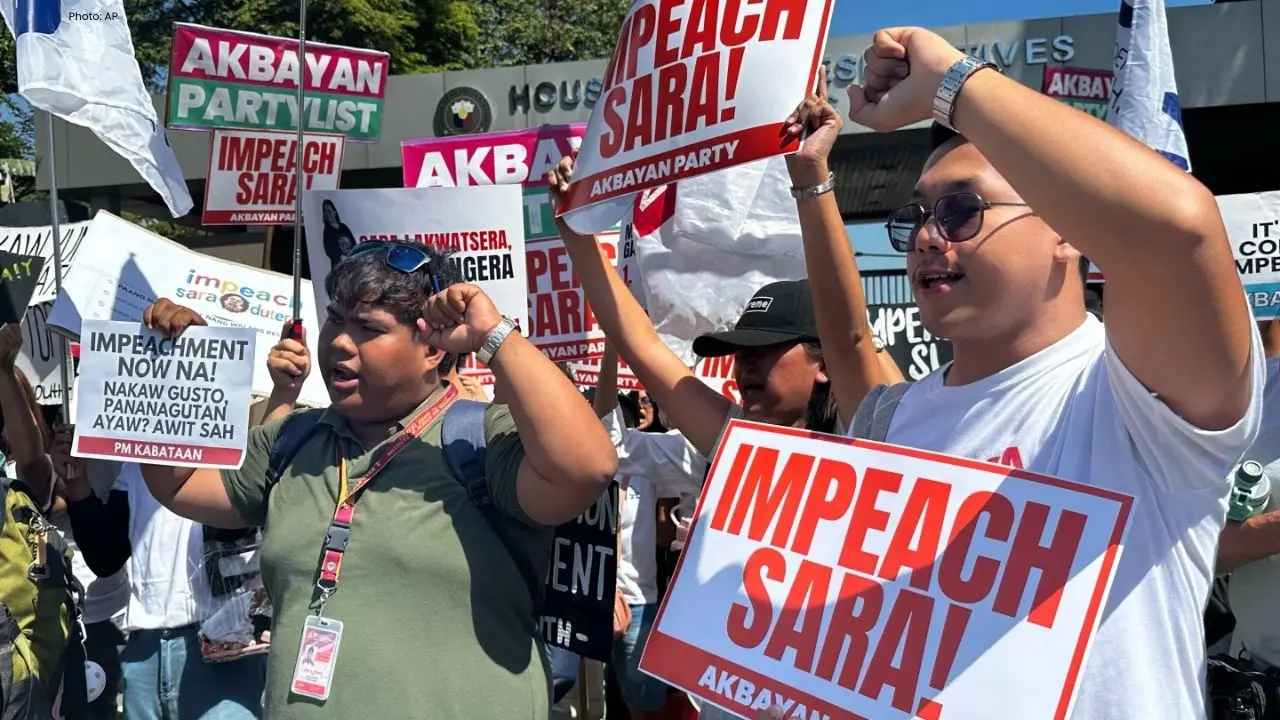
The House of Representatives in the Philippines has impeached Vice President Sara Duterte after an overwhelming vote on charges of dubious wealth and alleged threats against President Ferdinand Marcos Jr. This congressional action signifies a notable escalation in the ongoing political rivalry between top leaders and poses potential repercussions for Duterte's political aspirations ahead of the 2028 presidential elections.
In a vote largely influenced by President Marcos’s allies, the House approved the impeachment with a count of 257-25, alongside nine abstentions. The case will proceed to the Senate, where formal trials will unfold. The charges include suspicious financial activities, inappropriate use of government resources, and controversial remarks threatening the president and his family. Duterte has refuted these allegations, and her legal representatives are ready to mount a defense in the Senate.
Tensions escalated in Manila just before the impeachment vote, leading to Senate President Vicente Sotto III's ouster. Sotto had signaled intent to expedite the impeachment proceedings against Duterte, and his removal has sparked uncertainty regarding the timeline of the Senate trial.
Concurrently, another significant turn in Philippine politics involved Senator Ronald dela Rosa, closely associated with former President Rodrigo Duterte. Dela Rosa made a surprise return to the Senate after a prolonged absence. Reports suggest that National Bureau of Investigation agents sought to detain him following an arrest warrant from the International Criminal Court for alleged crimes against humanity during anti-drug operations authorized by Duterte.
The ICC has indicated that the charges stem from alleged killings of at least 32 individuals during 2016-2018, while dela Rosa held the position of national police chief. Former President Rodrigo Duterte faces parallel legal challenges in the Netherlands on related accusations concerning his anti-drug initiative that resulted in numerous fatalities. Additionally, ongoing investigations are examining the actions of police officials during these contentious operations.
Sara Duterte has consistently denied allegations of corruption and misconduct. Her legal team argues that the impeachment proceedings are politically charged, insisting that the prosecution carries the burden of proof during the trial. Duterte has also claimed that her political rivals are attempting to undermine her potential presidential run in 2028.
Furthermore, the impeachment complaints referenced statements made by Duterte in a 2024 online conference, where she insinuated a potential assassination plot against President Marcos and others if her safety were compromised. Duterte later clarified her comments were not threats, but expressions of concern. Despite the turbulence, opinion polls indicate that Sara Duterte continues to enjoy substantial popularity among the populace. Analysts predict that this impeachment conflict may exacerbate existing political rifts and influence the political trajectory of the Philippines in future elections.