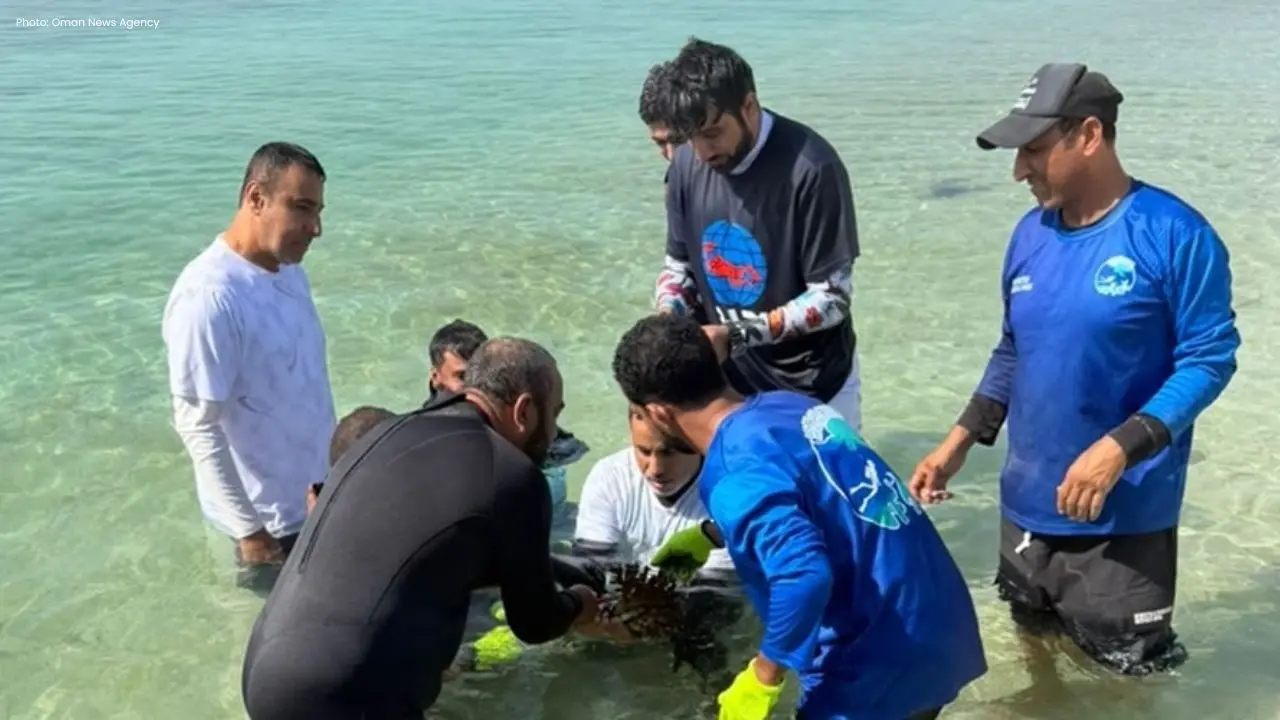
The Environment Authority has kicked off a coral rehabilitation initiative within the Daymaniyat Islands Nature Reserve, reinforcing its commitment to safeguarding marine ecosystems in Oman.
This project concentrates on the restoration of rare coral species by transplanting between 600 and 1,000 coral fragments using direct fixation methods. The ultimate goal is to restore essential habitats and support marine life, notably species of economic importance like the Grouper fish.
This initiative is a direct response to escalating environmental issues stemming from climate change and increasing sea temperatures, both of which have detrimental effects on coral reef ecosystems worldwide. The pressing need for coral restoration has made such efforts crucial.
According to the Authority, the project adopts a scientific methodology involving the monitoring of key environmental elements, including water temperature, oxygen concentration, and acidity levels. These metrics are vital for ensuring the survival of the cultivated coral and maintaining ecological stability.
Ongoing biological and environmental assessments will be conducted to monitor coral growth and survival rates. A detailed scientific report will be compiled to illustrate the project's findings and develop a model for future conservation efforts.
The program is launching in partnership with Sultan Qaboos University and is supported by Oman Liquefied Natural Gas. This showcases a collaborative approach among government entities, academic institutions, and the private sector.
Officials are optimistic that this initiative will vastly increase coral coverage in the reserve, enhance fish populations, and elevate environmental awareness. Moreover, it is projected to bolster Oman’s reputation as a premier destination for marine ecotourism while ensuring sustainable resource management for generations to come.