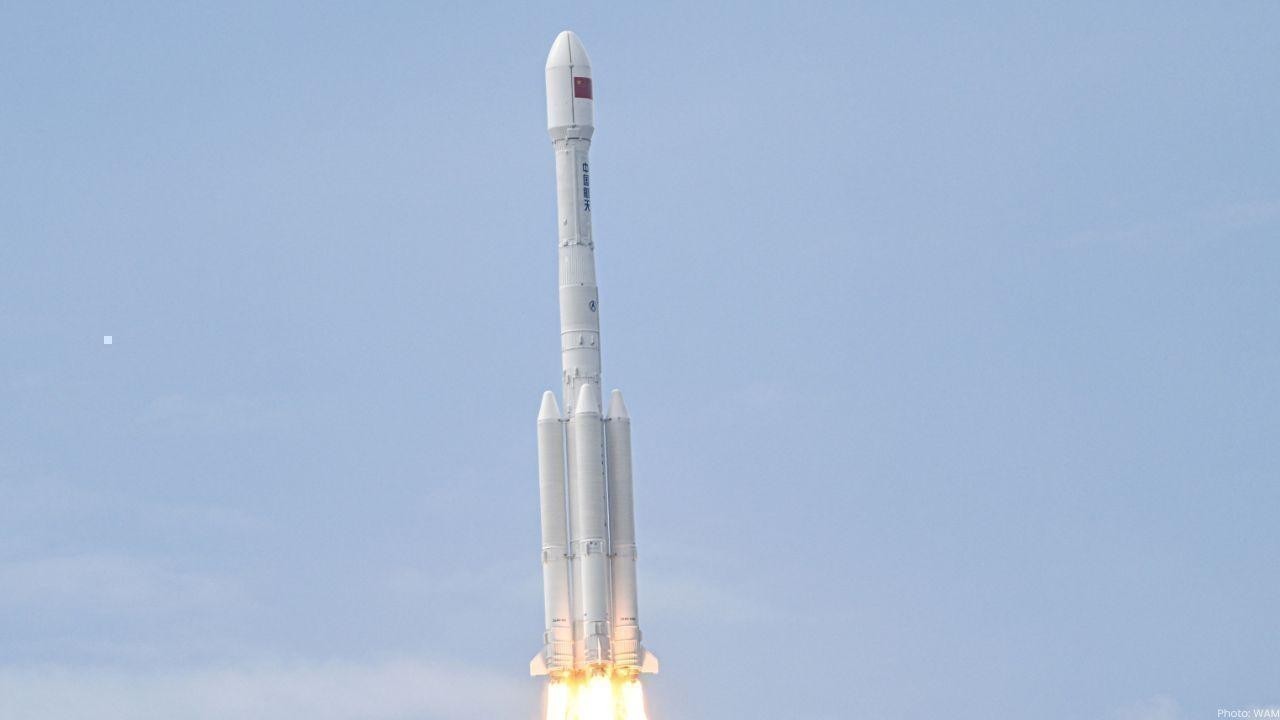
Early Tuesday morning, a significant space mission took place off the eastern coast of China, marking another milestone in the country's growing space capabilities. The Smart Dragon-3 rocket successfully lifted off from the waters near Rizhao, a coastal city in Shandong Province. This mission carried the Geely-05 constellation satellites, which were released into their planned orbits as part of China’s ongoing efforts to expand its satellite network.
This event is notable not only for the technological achievement but also for the fact that the launch was conducted offshore, a method that allows greater safety and flexibility for space missions. The launch was managed by the Taiyuan Satellite Launch Centre, which oversaw the complex process from start to finish.
Stay informed with the latest news. Follow DXB News Network on WhatsApp Channel
About the Smart Dragon-3 Rocket
The Smart Dragon-3 rocket is one of China’s advanced space launch vehicles designed to carry satellites into various types of orbits. It represents a new generation of Chinese rockets with improved precision, safety measures, and payload capabilities. Unlike traditional land-based launches, the Smart Dragon-3 has the capability to be launched from offshore platforms, which reduces risks to populated areas and provides flexibility in choosing launch sites.
The rocket is engineered to transport multiple satellites simultaneously, which is crucial for deploying satellite constellations like the Geely-05 series. These constellations are designed to provide enhanced coverage for communications, navigation, and Earth observation.
The Geely-05 Satellite Constellation
The main payload of this mission, the Geely-05 constellation, consists of several satellites designed to work together in coordinated orbits. Satellite constellations like these have become increasingly important for global communications, weather monitoring, scientific research, and national security purposes.
The satellites were carefully programmed to separate from the rocket and settle into precise orbital positions. Once in orbit, they will begin their mission of collecting data, supporting communication networks, and strengthening China’s satellite capabilities. The success of this launch adds a new layer of functionality and reliability to the Geely-05 constellation program.
Offshore Launch from Rizhao
Unlike traditional rocket launches from land-based sites, this mission took place off the coast, in the sea near Rizhao. Offshore launches offer several advantages: they reduce risks to human populations, allow for more flexible flight paths, and provide a safer environment for testing new launch technologies.
Rizhao, a city known for its coastal landscapes, became the focal point for this mission. The launch took careful planning, including coordination with maritime authorities to ensure safety for nearby ships and coastal communities. Conducting a successful offshore launch highlights China’s ability to innovate in space technology and adapt launch techniques to meet growing satellite deployment demands.
Role of the Taiyuan Satellite Launch Centre
The Taiyuan Satellite Launch Centre, located in northern China, is one of the country’s major launch sites. In this mission, the centre managed the operations, technical preparations, and monitoring of the rocket throughout the launch process. Engineers and technicians ensured that all systems were functioning correctly, the weather conditions were suitable, and the launch sequence proceeded without issues.
Their expertise played a key role in guaranteeing that the Geely-05 satellites reached their intended orbits safely. Launches of this scale require meticulous planning, coordination among multiple teams, and real-time monitoring to handle any unexpected circumstances. The success of this mission demonstrates the proficiency and readiness of China’s space infrastructure.
Significance of the Mission
The launch of the Smart Dragon-3 rocket carrying the Geely-05 satellites is a major step forward for China’s space program. Satellite constellations are essential for modern communications, navigation, and scientific research. By successfully deploying these satellites, China strengthens its technological independence and contributes to global satellite networks.
Furthermore, offshore launches signal China’s ability to experiment with new methods of space travel and satellite deployment. This flexibility may lead to more frequent launches in the future, supporting both national projects and potential commercial satellite services.
The mission also reflects a broader trend in space exploration, where countries are increasingly looking to deploy satellite constellations to enhance their presence in space. Each successful launch adds to the knowledge and experience required to handle more complex missions in the future.
Future Prospects
With the Geely-05 constellation now in orbit, China can expect improved capabilities in satellite communication, observation, and navigation. The success of the Smart Dragon-3 rocket may pave the way for more advanced offshore launches and the deployment of larger satellite networks.
Experts predict that China’s continued investments in rocket technology and satellite constellations will further strengthen its position in global space exploration. Future missions are likely to involve larger constellations, more precise orbital placements, and possibly even international collaborations.
The successful launch of the Smart Dragon-3 rocket from offshore near Rizhao marks another milestone in China’s expanding space ambitions. The Geely-05 satellites are now in their planned orbits, ready to carry out their missions. This achievement highlights China’s growing expertise in rocket technology, offshore launches, and satellite deployment, signaling a bright future for its space program.
As technology evolves and space exploration becomes increasingly important, missions like these showcase the ability of nations to innovate, adapt, and expand their reach beyond Earth. The success of this launch not only strengthens China’s satellite network but also contributes to the broader global efforts in space research and technology.