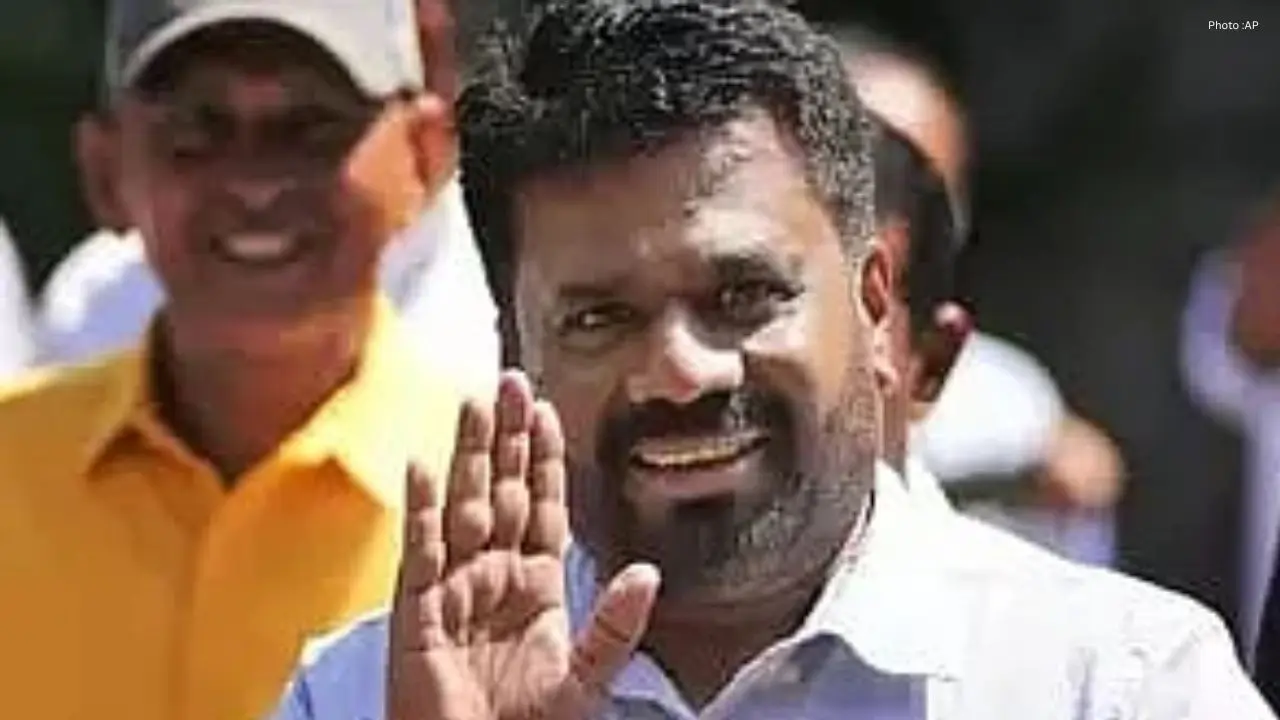
Sri Lankan President Anura Kumara Dissanayake extended his congratulations to Tamil actor and political figure Vijay, underscoring the enduring historical and cultural ties binding Sri Lanka and Tamil Nadu. These comments struck a chord within political and entertainment circles, particularly among Tamil-speaking communities in both regions.
Sources indicate that President Dissanayake highlighted the strong connections woven between the people of Sri Lanka and Tamil Nadu through language, culture, commerce, and customs that have thrived over centuries. He emphasized that their relationship transcends politics, deeply rooted in history, literature, religion, and familial bonds.
Recognizing Vijay’s rising stardom among Tamil audiences, the President commended his contributions to the film industry and civic matters. Vijay, one of South India’s most celebrated actors, has recently stepped more prominently into political dialogues and philanthropic endeavors through his party and social initiatives, continuing to draw attention from various political figures and supporters in the area.
The remarks from President Dissanayake were made during talks focused on cultural collaboration and regional relationships between India and Sri Lanka. Officials from both nations frequently discuss enhancing people-to-people interactions, tourism, education, and programs dedicated to cultural exchange as a means to bolster relations between the two neighboring regions.
The historical rapport between Tamil Nadu and Sri Lanka spans thousands of years, with ancient trade routes connecting southern India and Sri Lanka. Tamil communities have had a significant influence on Sri Lanka’s cultural and social landscape. Links through Hinduism and Buddhism have also fostered continuous interaction over generations.
Political analysts suggest that the President’s statements may aim to foster goodwill among Tamil-speaking populations following prolonged ethnic tensions in Sri Lanka. The country continues its journey towards reconciliation and rebuilding trust after the conclusion of its civil war in 2009.
In parallel, Vijay’s increased political visibility in Tamil Nadu has heightened public interest in his affiliations with both local and international figures, appealing to a fan base that reaches beyond India, including Tamil communities in Sri Lanka, Malaysia, Singapore, and other nations with significant Tamil populations.
The Sri Lankan President’s comments have elicited diverse reactions online, with many supporters welcoming the acknowledgment of a shared cultural heritage. Others see these sentiments as a crucial diplomatic move aimed at fostering better regional understanding and collaboration.
This incident once again brings to light the robust emotional, cultural, and historical connections between Tamil Nadu and Sri Lanka, prevailing despite the political upheavals and challenges encountered over time.