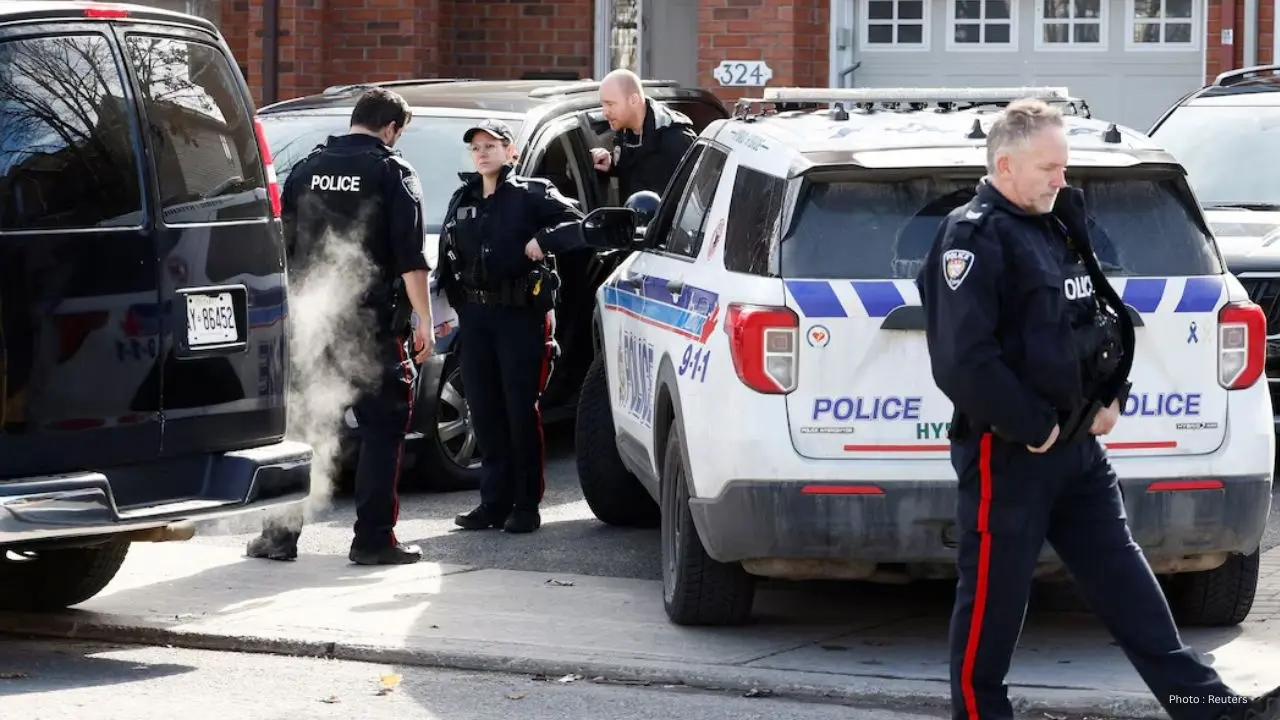
Three Toronto police officers arrested in Spain on serious criminal charges are currently on paid suspension from the Toronto Police Service. However, this status may change depending on the legal and internal inquiries that follow. The situation has ignited significant discourse in Canada regarding police accountability and the policies surrounding paid suspensions for officers facing allegations while abroad.
The officers were apprehended in Barcelona after being accused of participation in a sexual assault incident involving a woman referred to by authorities as a sex worker. According to reports from the Mossos d’Esquadra police force in Catalonia, the alleged incident occurred in a taxi within the Ciutat Vella area while the officers were off-duty and on holiday. Their arrests took place on May 15, 2026.
The Toronto Police have identified that the officers are suspended under the Community Safety and Policing Act of Ontario. As per current provincial legislation, officers typically retain their salaries while suspended, unless specific legal criteria are met. A spokesperson for Toronto police indicated they are assessing whether the officers might ultimately be subject to suspension without pay, depending on the gravity of the charges and how the legal process unfolds.
In recent years, Ontario has modified police regulations to empower police chiefs with greater authority to impose unpaid suspensions in severe cases. Salary payments can potentially be halted if an officer is convicted of a significant offense, sentenced to imprisonment, or if police authorities determine that ongoing payouts would severely undermine public faith in law enforcement. Experts suggest the Toronto Police Service might await further developments in Spain before concluding their course of action.
The case has incited robust public reactions across Canada, particularly on social media, with many questioning the rationale behind providing pay to officers facing grave allegations. Conversely, others advocate for the existing policy, emphasizing that officers remain presumed innocent until proven guilty. This discussion has also reignited critiques of the disciplinary framework within Ontario’s police services.
The Toronto Police Association has refrained from providing detailed commentary on the allegations, stating only that the incidents pertain to off-duty behavior outside of Canada. Meanwhile, leadership within the Toronto police forces described the allegations as “serious” and confirmed that the officers are not engaged in active policing while investigations proceed.
These arrests add to the mounting scrutiny faced by the Toronto Police Service, which has recently been under the microscope due to separate investigations into corruption and misconduct involving present and former officers. Questions regarding public trust and police accountability have surged as pressing political topics in Toronto and Ontario in recent months.