Earthquake Today: 7.3–7.5 Magnitude Quake Hits Japan; Tsunami Warning Issued
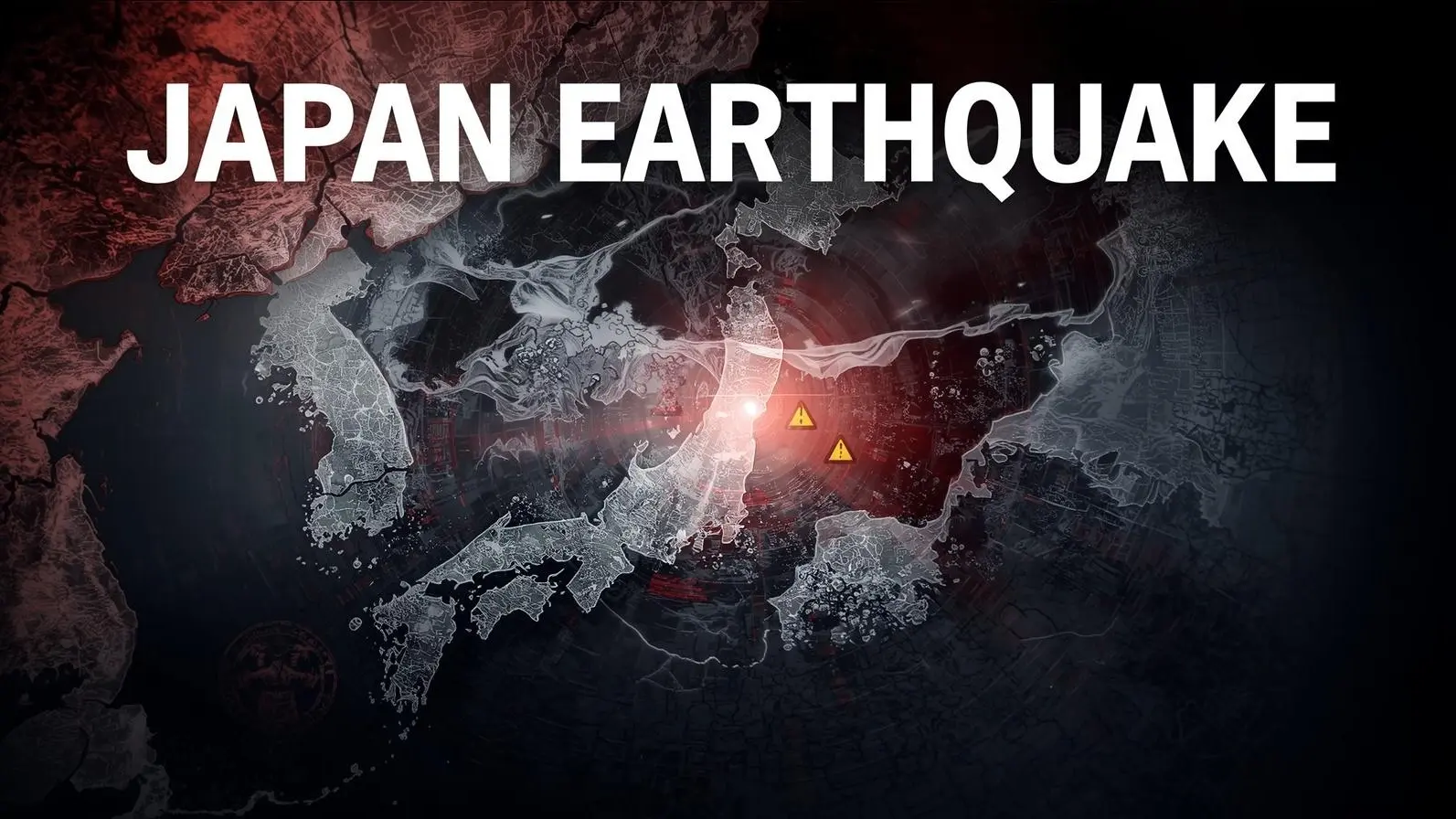
A powerful earthquake has struck Japan, sending strong tremors across multiple regions and triggering an urgent tsunami warning. The quake, initially reported at magnitude 7.3 and later revised closer to 7.5, occurred off the northeastern coast, prompting immediate emergency alerts and evacuation advisories.
Authorities have urged residents in coastal areas to move to safer locations as a precaution, while emergency teams continue to assess the situation.
Where and when did the earthquake occur?
The earthquake struck off the eastern coast of Japan’s main island, near the Sanriku region, at a relatively shallow depth. Because of this shallow depth, the shaking was intense and felt across several prefectures.
Tremors were reported in regions such as Iwate and Aomori, and even parts of Tokyo experienced noticeable shaking. In some areas, the intensity was strong enough to raise concerns about structural damage, particularly in older buildings.
Tsunami warning issued — what does it mean?
Following the earthquake, authorities issued a tsunami warning, predicting waves that could reach several meters in height.
In a country like Japan, tsunami warnings are taken extremely seriously due to past experiences with coastal disasters. People living in affected areas have been advised to evacuate immediately and move to higher ground.
Even smaller waves have the potential to cause damage, and conditions can change quickly, which is why early action is critical.
Emergency response and safety measures
Japan’s emergency response system was activated within minutes of the quake. Officials began coordinating rescue efforts, monitoring coastal activity, and issuing continuous alerts.
Transportation services were affected in some regions, with precautionary shutdowns implemented to ensure public safety. Authorities also began inspecting infrastructure, including buildings, roads, and coastal facilities.
Public announcements have been ongoing, urging citizens to remain calm but act quickly where evacuation is required.
Why earthquakes are common in Japan
Japan lies along the Pacific Ring of Fire, one of the most seismically active zones in the world. This makes earthquakes a frequent occurrence in the region.
Because of this, the country has developed advanced early warning systems and strict building standards to reduce damage and improve safety during such events.
Concerns about aftershocks and ongoing risks
After a major earthquake, aftershocks are common and can continue for hours or even days. Some aftershocks can be strong enough to cause further damage.
Residents are being advised to stay alert, avoid weakened structures, and follow official instructions closely.
Memories of past disasters raise concern
Events like this often remind people of previous major earthquakes and tsunamis that have impacted Japan.
While this earthquake is being closely monitored, the presence of a tsunami warning increases concern, making evacuation and preparedness extremely important.
Current situation: What we know so far
-
Magnitude reported between 7.3 and 7.5
- Epicenter off northeastern Japan
- Tsunami warning issued
- Evacuation advisories in coastal areas
- Emergency response teams active
Authorities are continuing to monitor developments and provide updates as more information becomes available.
What people in affected areas should do
Residents in coastal regions are strongly advised to:
- Move immediately to higher ground
- Stay away from beaches and rivers
- Follow official evacuation instructions
Taking quick action can significantly reduce risk during such emergencies.
This earthquake highlights how quickly natural disasters can occur and how important preparedness is. Japan’s rapid response and advanced systems play a crucial role in minimizing risk.
As the situation develops, staying informed and following official guidance remains the most important step for safety.
Disclaimer
This is a developing news update. Information may change as new official details are released. Readers are advised to follow local authorities for real-time updates.