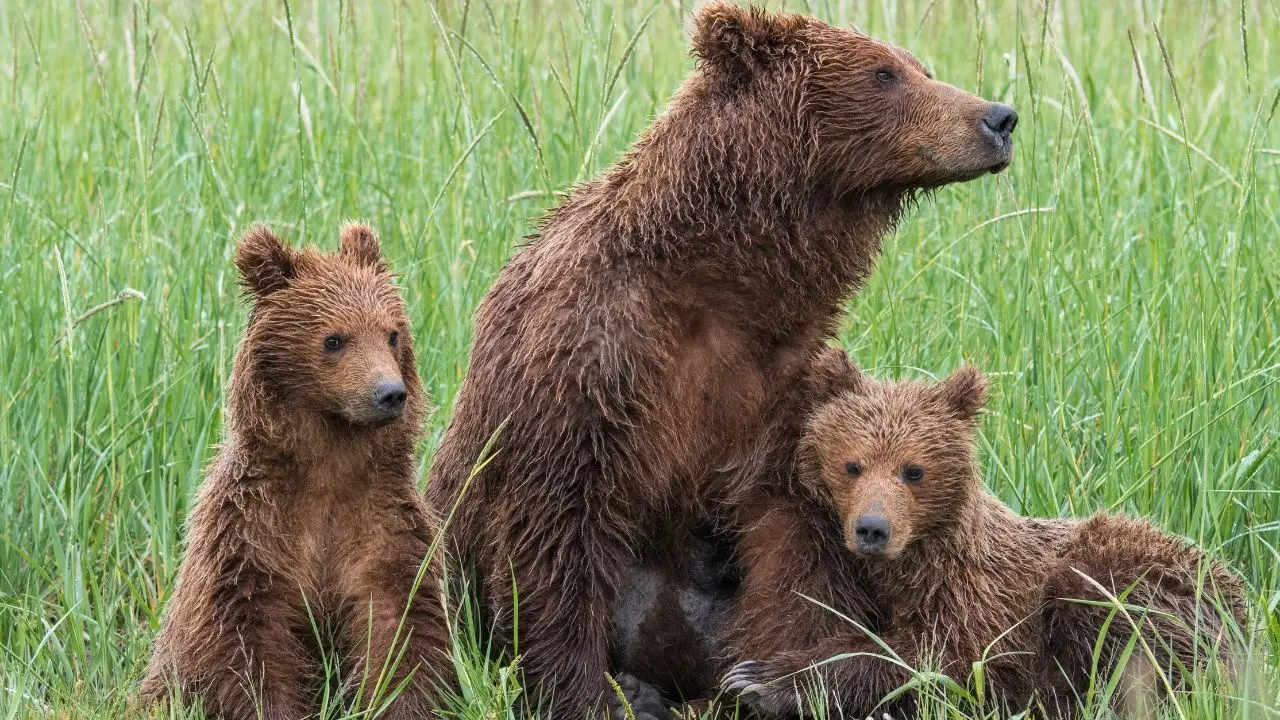
In a remarkable wildlife encounter, a female Himalayan brown bear along with her two cubs was recently recorded in Himachal Pradesh's Kinnaur district, close to the Indo-China border, specifically within the Rakcham-Chitkul Wildlife Sanctuary. This sighting has been hailed by wildlife experts and conservationists as a noteworthy event for biodiversity preservation and monitoring in the Himalayan region.
The footage was obtained by a diligent team from the forest department, which included Block Forest Officer Santosh Kumar Thakur, along with forest guards Chhayanand, Akshay, and Pawan Kumar. Forest volunteer Alpana Negi was also part of this dedicated group. They were joined by distinguished ornithologist and naturalist Gary Bhatti, alongside wildlife experts Dr Bishwarup Satpati and Dr Rahul Deb Mandal.
Renowned for being one of the most protected species in India, the Himalayan brown bear is granted the utmost legal protection under Schedule I of the Wildlife Protection Act of 1972. Primarily found in the high-altitude areas of Himachal Pradesh, Jammu and Kashmir, and Uttarakhand, these bears inhabit various protected wildlife zones.
Experts indicate that such sightings are very rare due to the naturally shy and solitary behavior of Himalayan brown bears. Unlike their Asian black bear counterparts, who are frequently seen at lower elevations and closer to human activities, brown bears are typically found above 2,500 meters in secluded mountainous regions. They are predominantly solitary except during mating season and when raising their cubs, making the presence of a mother bear with two cubs especially extraordinary.
The Rakcham-Chitkul Wildlife Sanctuary, situated in the secluded Himalayan zone of Kinnaur, is noted for its fragile ecosystem and rich biodiversity. Wildlife experts assert that the presence of this bear family signifies a sustained ecological balance within the sanctuary, even amidst the environmental challenges faced in mountainous ecosystems.
According to researchers, these bears typically weigh between 100 and 150 kilograms and can reach up to six feet in height when standing. Their diet mainly comprises herbs, roots, plants, and berries, with only a small proportion including meat. Experts characterize this species as being less aggressive and more gentle compared to numerous other large bear species.
The rare sighting has stirred excitement among wildlife enthusiasts and conservation groups throughout India. Environmental advocates emphasize that such sightings play a pivotal role in raising awareness about the protection of endangered Himalayan wildlife and the preservation of natural habitats in sensitive border areas.