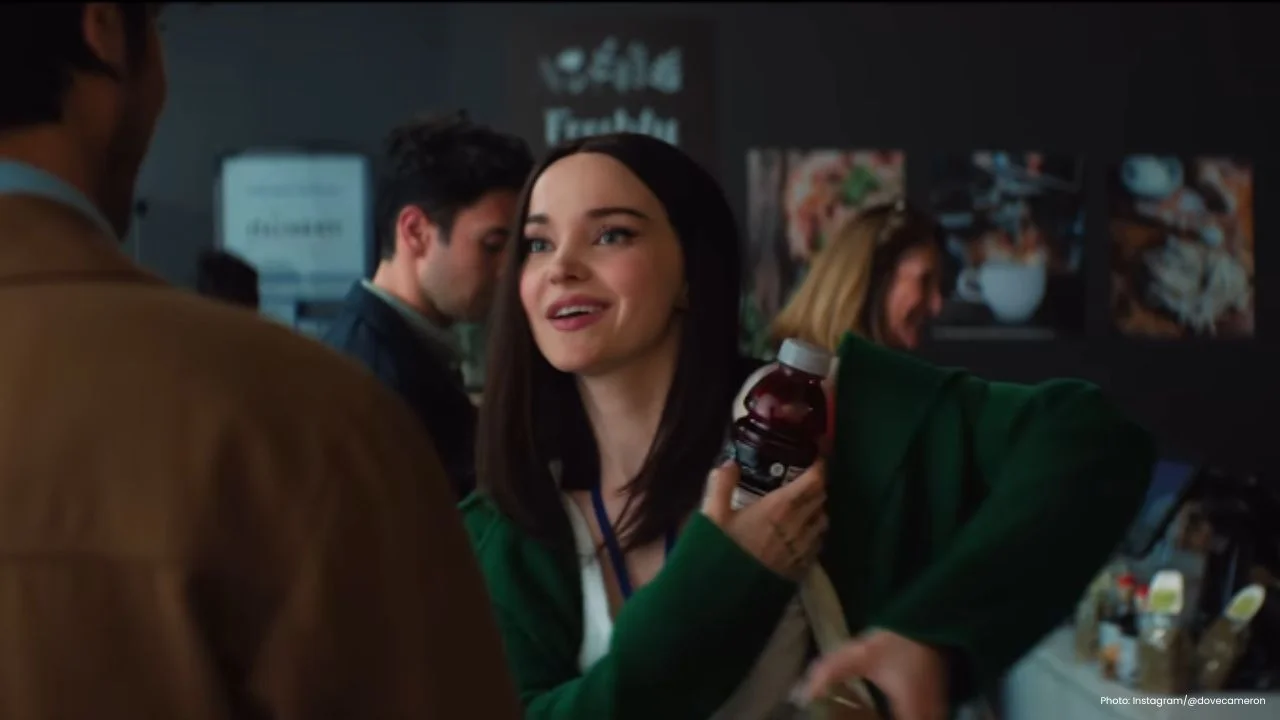
In a cinematic landscape filled with spectacle and fast-moving plots, 56 Days arrives as something far more intimate and emotionally resonant. Starring Dove Cameron and Avan Jogia, the film has quickly become one of the most talked-about romantic dramas of the year, not because of grand effects or dramatic twists, but because of its quiet, powerful exploration of love, time, and human connection.
A Love Story Defined by Time
At its heart, 56 Days tells a simple yet deeply moving story. Two strangers meet under unexpected circumstances, their lives intersecting at a moment when neither of them is prepared for what follows. What begins as a fleeting encounter slowly grows into something meaningful, something that neither can easily walk away from. But there is one defining element that shapes everything: they only have 56 days together.
This premise alone creates an emotional tension that runs throughout the film. Time becomes more than just a background element—it becomes a character in its own right. Every moment feels significant, every conversation carries weight, and every silence speaks volumes. The audience is constantly aware that the clock is ticking, that every shared glance or quiet laugh is part of something temporary yet deeply real.
Performances That Bring Emotional Depth
Dove Cameron delivers one of her most mature and emotionally layered performances to date. Known for her versatility across genres, she steps into this role with a quiet intensity that feels both natural and compelling. Her character is not defined by dramatic gestures but by subtle emotional shifts—moments of hesitation, vulnerability, and unexpected strength. She brings a softness to the role that makes her journey feel authentic, allowing the audience to connect with her on a deeply personal level.
Opposite her, Avan Jogia provides a grounded and thoughtful performance that perfectly balances the film’s emotional tone. His portrayal is introspective, carrying a sense of depth that gradually unfolds as the story progresses. Rather than overwhelming the narrative with intensity, he allows the character to breathe, creating a presence that feels steady and real. Together, their chemistry is undeniable—not because it is exaggerated, but because it feels honest.
Also Read This: Street Fighter Movie Trailer: A Nostalgic Action Adventure
What makes 56 Days particularly compelling is its pacing. The film does not rush through its story. Instead, it allows moments to linger, giving the audience time to feel the weight of each interaction. Conversations unfold naturally, often in quiet settings where the focus is entirely on the characters and their emotions. This deliberate pace may feel slow to some viewers, but it is precisely what gives the film its emotional depth.
Visually, the film embraces simplicity. The cinematography avoids unnecessary distraction, focusing instead on intimate framing and natural light. Scenes are often set in everyday environments—cafés, quiet streets, small apartments—places that feel familiar and lived-in. This grounded approach enhances the realism of the story, making the emotional journey feel even more relatable.
Music also plays a subtle yet powerful role in shaping the film’s atmosphere. Rather than dominating scenes, the soundtrack gently supports the narrative, appearing at key moments to deepen the emotional impact. Silence, too, is used effectively. There are moments when no music is needed, when the absence of sound allows the audience to fully absorb what is happening on screen.
A Story That Lingers Beyond Time
Beyond its romantic core, 56 Days explores broader themes that resonate with modern audiences. It raises questions about how people connect in a world that often feels fast and disconnected. It asks what it means to truly know someone, and whether time is a limitation or simply a measure of experience. The film suggests that the depth of a relationship is not defined by its length, but by its honesty.
The concept of limited time also reflects a deeper philosophical idea. Knowing that something will end can make it more meaningful. In 56 Days, this awareness shapes the characters’ choices. They are forced to confront their fears, to be more open, more present, and more willing to take emotional risks. This creates a sense of urgency that feels both beautiful and heartbreaking.
Audience reactions to the film have been largely emotional. Many viewers describe it as a story that stays with them long after the credits roll. It is not a film built on dramatic twists, but on emotional truth. It invites reflection, encouraging viewers to think about their own relationships and the value of time spent with others. Critics have also highlighted the film’s restraint as one of its greatest strengths. In an era where many stories rely on spectacle, 56 Days chooses a different path. It trusts its characters, its performances, and its quiet moments to carry the narrative. This confidence results in a film that feels sincere and thoughtfully crafted.
The pairing of Dove Cameron and Avan Jogia has been a key factor in the film’s success. Their ability to create a believable emotional connection anchors the entire story. There is a natural rhythm to their interactions, a sense that these are two people discovering each other in real time. This authenticity is what allows the film to resonate so strongly.
As the story moves toward its conclusion, the emotional weight becomes more pronounced. The awareness of time that has been present from the beginning grows heavier, leading to moments that are both tender and difficult. Without revealing too much, the film does not rely on predictable endings. Instead, it remains true to its tone, offering a resolution that feels honest and reflective of the journey that came before it.
In the end, 56 Days is more than just a romantic drama. It is a meditation on time, connection, and the fleeting nature of moments that define us. It reminds viewers that even the shortest experiences can leave lasting impressions, and that love, in its truest form, is not measured by duration but by depth.
In a world that often moves too quickly, this film invites audiences to slow down, to pay attention, and to appreciate the moments that matter. Through its performances, its storytelling, and its emotional sincerity, 56 Days stands out as a film that does not simply tell a story—it allows viewers to feel it.
And in that feeling, it leaves behind something rare: a quiet, lasting impact that lingers long after the final scene fades.